
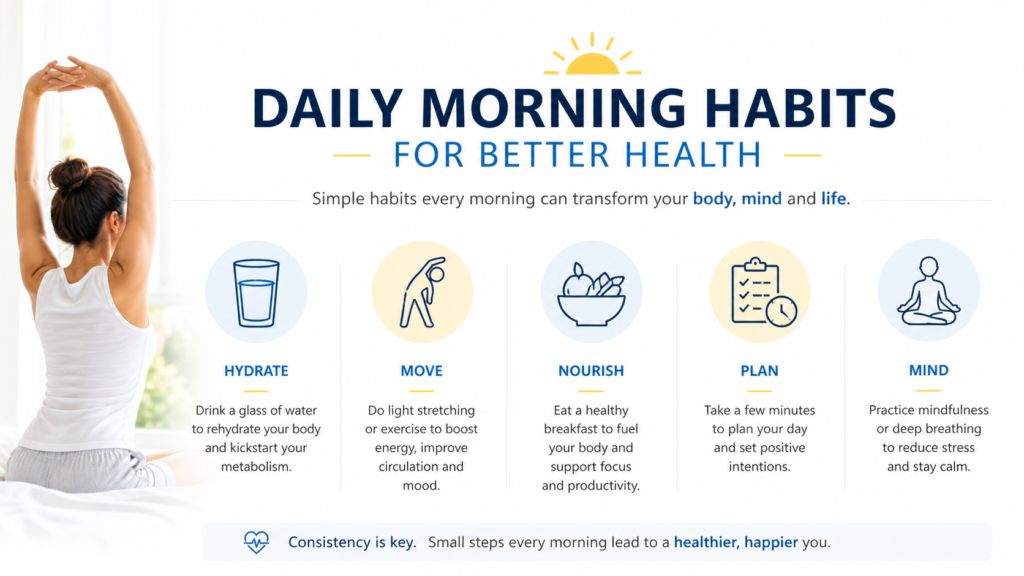
The way you begin your morning sets the neurological, physiological, and psychological trajectory for the rest of your day. For decades, wellness experts have touted the benefits of a “morning routine,” but only recently has clinical science begun to uncover the exact biological mechanisms that make specific morning habits so powerful. When you wake up, your body is in a unique state: your core body temperature is shifting, your stress hormones are fluctuating, and your brain waves are transitioning from restorative deep sleep to wakeful alertness.
By strategically aligning your behaviors with your body’s natural physiological rhythms, you can optimize your energy levels, stabilize your mood, enhance your cognitive focus, and protect your long-term cardiovascular and metabolic health. This comprehensive guide explores the deep science behind five foundational morning habits, providing actionable, user-friendly steps to integrate them into your daily life.
1. Cellular Rehydration: The Science of Morning Water Intake
After seven to nine hours of sleep, the human body wakes up in a state of mild dehydration. Throughout the night, you lose a significant amount of water through respiration (breathing out water vapor) and subtle transpiration (sweating).
The Physiological Impact of Dehydration
Water is not just a passive background fluid; it is the active medium in which virtually all cellular and biochemical reactions take place. It is essential for thermoregulation, maintaining vascular volume, transporting nutrients, and clearing metabolic waste. According to authoritative bodies like the Institute of Medicine (IOM) and the European Food Safety Authority (EFSA), general hydration is critical, but morning hydration is particularly vital for kickstarting your organs.
When you wake up dehydrated, your blood volume is slightly reduced, making your blood thicker. This forces your heart to work harder to pump oxygen to your brain and muscles. Clinical studies show that a reduction of even 2% in body mass due to dehydration can negatively affect mood, increase fatigue, and reduce alertness. Furthermore, the kidneys must work harder to regulate plasma osmolality—the concentration of solutes in your blood. When osmolality rises due to a lack of water, it triggers an impending hyperosmotic hypovolemic state, which essentially tells your brain that you are under metabolic stress.
The Benefits of Immediate Hydration
Drinking a large glass of water immediately upon waking provides several immediate benefits:
- Cognitive Activation: The brain is roughly 73% water. Rehydrating helps clear “sleep inertia,” the groggy feeling you experience upon waking, by ensuring optimal fluid balance in the brain’s tissues.
- Metabolic Boost: Some studies suggest that drinking water, especially cool or room-temperature water, can temporarily increase your resting metabolic rate. The body must expend energy to heat the water to core body temperature (a process known as water-induced thermogenesis).
- Gastrointestinal Health: Morning water intake stimulates the gastrointestinal tract and helps regulate bowel movements. Research indicates that low fluid intake is a primary driver of intestinal constipation in the general population.
How to Implement Morning Hydration
- Keep it Visible: Place a 16 to 24-ounce (roughly 500-700 ml) glass or bottle of water on your nightstand before you go to bed.
- Drink Before Coffee: Caffeine is a mild diuretic. Ensure you consume your baseline water before introducing coffee or tea into your system.
- Electrolyte Enhancement: If you eat a whole-food diet that is naturally low in sodium, or if you sweat heavily at night, adding a small pinch of sea salt or a squeeze of lemon to your morning water can help replenish lost minerals and improve cellular fluid absorption.
2. Circadian Entrainment: The Power of Morning Sunlight
Perhaps the most biologically profound habit you can adopt is exposing your eyes to natural sunlight within the first 30 to 60 minutes of waking. This practice is rooted in chronobiology and the regulation of your Circadian rhythm, the 24-hour internal clock that dictates sleep-wake cycles, hormone production, and cellular regeneration.
The Mechanism of the Circadian Clock
Your circadian rhythm is governed by the suprachiasmatic nucleus (SCN), a tiny region in the hypothalamus of your brain. The SCN acts as the master clock, but it requires external cues—known as zeitgebers (time-givers)—to stay synchronized with the 24-hour Earth day. The most powerful zeitgeber is light.
When natural sunlight enters your eyes, photons hit specialized light-sensitive cells in the retina called intrinsically photosensitive retinal ganglion cells (ipRGCs). These cells contain a photopigment called melanopsin, which is particularly sensitive to the blue and green light wavelengths abundant in morning sunlight. When melanopsin is activated, it sends an electrical signal directly to the SCN, communicating a clear message: “It is daytime. Wake up the body.”
Cortisol and Melatonin Regulation
This light signal triggers a healthy, natural spike in cortisol. While often demonized as a “stress hormone,” a morning peak in cortisol (the Cortisol Awakening Response) is essential. It provides energy, focus, and immune system regulation.
Crucially, this morning light exposure also starts a biological timer for your evening sleep. The SCN coordinates with the pineal gland to schedule the release of melatonin (the sleep hormone) approximately 12 to 14 hours later. Research shows that reduced exposure to daytime sunlight and increased exposure to artificial lighting leads to late circadian timing, which is associated with daytime sleepiness, mood disorders, and metabolic dysfunction.
Indoor vs. Outdoor Light
A common misconception is that turning on indoor lights or sitting near a window is sufficient. It is not. The intensity of light is measured in lux. As shown in the table below, natural outdoor light is exponentially brighter than standard indoor lighting, even on an overcast day. Furthermore, modern windows filter out essential light wavelengths required to optimally trigger melanopsin.
| Light Source | Approximate Illuminance (Lux) | Biological Effectiveness for Circadian Alertness |
| Direct Summer Sunlight | 100,000+ lux | Optimal / Maximum |
| Clear Spring/Fall Morning | 10,000 – 25,000 lux | Optimal |
| Overcast/Cloudy Day | 1,000 – 5,000 lux | Highly Effective (Requires longer exposure) |
| Typical Office / Home Lighting | 100 – 500 lux | Insufficient for morning entrainment |
How to Implement Morning Sunlight
- Timing: Step outside within 30-60 minutes of waking.
- Duration: Aim for 5 to 10 minutes on a clear, sunny day. If it is cloudy or overcast, you may need 15 to 20 minutes to absorb enough photons.
- No Sunglasses: Do not wear sunglasses during this time, as they block the necessary light. Standard prescription eyeglasses or contact lenses are perfectly fine.
- Consistency: Do this every single day, even on weekends, to keep your circadian clock firmly anchored.
(For further reading on how the environment affects public health, visit the World Health Organization).
3. Strategic Morning Movement for Cardiovascular Health
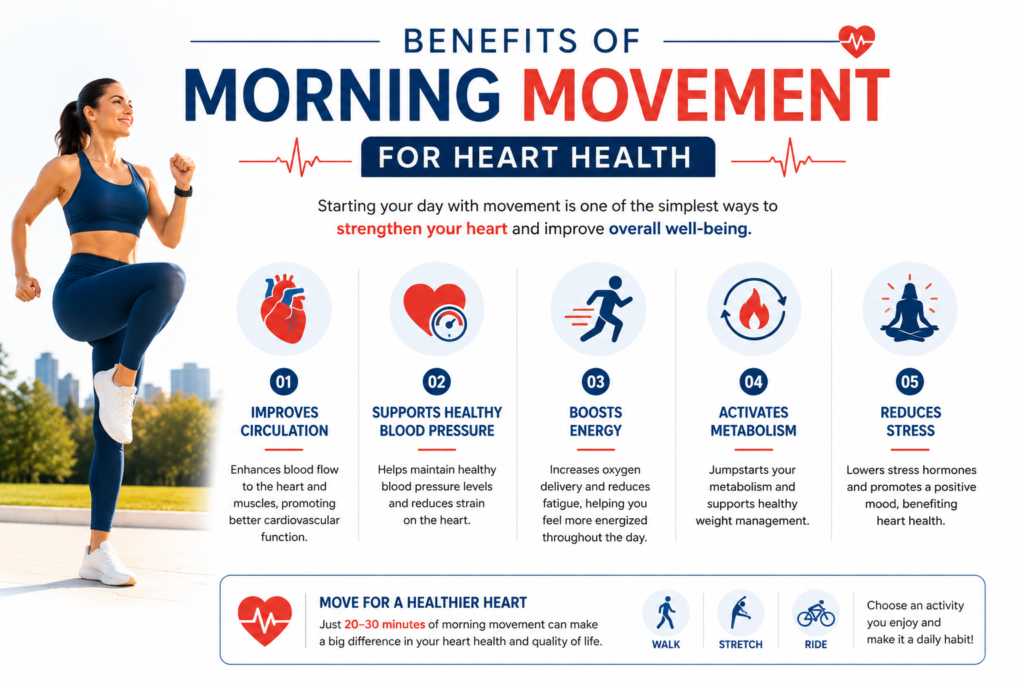
Physical activity is universally recognized as a pillar of health. However, performing it in the morning offers unique physiological benefits, particularly for metabolic regulation and cardiovascular adaptation, while also demanding certain precautions.
The Cardiovascular Dynamics of Morning Exercise
During the early morning, the body naturally experiences a rapid increase in blood pressure as you transition from sleep to wakefulness. Engaging in morning movement capitalizes on this natural state of arousal, increasing cardiac output and promoting the release of vasodilatory mediators such as nitric oxide, which helps keep blood vessels flexible and healthy over the long term.
Regular morning exercise is robustly associated with a decrease in cardiovascular mortality, lower resting blood pressure, higher insulin sensitivity, and a more favorable plasma lipoprotein profile. Exercise also triggers the release of Brain-Derived Neurotrophic Factor (BDNF), a protein that promotes the growth of new neurons and synapses, leading to enhanced focus and learning capacity for the remainder of the day.
A Note of Caution for Intense Morning Exertion
While moderate morning exercise is highly beneficial, clinical literature suggests that the cardiovascular system may be more vulnerable to extreme physical exertion in the early hours. Epidemiological studies looking at physical activity and cardiovascular mortality have found that the reactivity of blood pressure to intense physical exertion is heightened in the morning. Therefore, if you are an older adult or have pre-existing cardiovascular conditions, a gradual warm-up is strictly necessary before engaging in high-intensity interval training (HIIT) or heavy weightlifting early in the day.
How to Implement Morning Movement
You do not need to run a marathon before breakfast to reap the benefits. The goal is simply to increase blood flow, oxygenate your tissues, and lubricate your joints.
- Zone 2 Cardio: A brisk 20-minute walk (which pairs perfectly with your morning sunlight exposure) provides excellent cardiovascular benefits without causing undue stress to the heart.
- Mobility and Stretching: Engaging in 10 minutes of dynamic stretching or yoga can alleviate overnight muscle stiffness and improve posture.
- Consistency Over Intensity: A daily 15-minute routine is vastly superior to a sporadic two-hour morning workout that you abandon after a week.
(For national guidelines on recommended physical activity levels, consult the Centers for Disease Control and Prevention).
4. Nutritional Optimization: The High-Protein Breakfast
The debate over whether breakfast is the “most important meal of the day” has evolved. While intermittent fasting works well for some, robust clinical research over the past decade strongly supports the benefits of a high-protein breakfast, particularly for individuals looking to manage their weight, control their appetite, and optimize their body composition.
The Endocrinology of Satiety and Hunger
Appetite is tightly regulated by a complex interplay of hormones. Ghrelin is the “hunger hormone” that signals your brain to eat, while peptide YY (PYY) and leptin signal fullness and satiety.
Studies examining adolescents and adults who regularly skip breakfast have shown that skipping the first meal of the day often leads to increased evening snacking and weight gain. However, simply eating any breakfast is not the solution. A high-carbohydrate, low-protein breakfast (like standard cereal or a bagel) can cause a rapid spike in blood glucose followed by a sharp crash, leading to intense mid-morning hunger.
Conversely, a high-protein breakfast (typically defined as containing 30 to 35 grams of protein) leads to profound daily improvements in appetite regulation. Research demonstrates that consuming a protein-rich breakfast significantly reduces daily ghrelin levels and increases peptide YY concentrations compared to skipping breakfast or eating a normal-protein meal.
Neurological Impact on Food Reward Centers
Fascinating functional magnetic resonance imaging (fMRI) studies have shown that high-protein breakfasts actually alter brain activity. Specifically, they reduce pre-dinner corticolimbic activation—meaning they calm down the amygdala, hippocampus, and midfrontal regions of the brain that govern food motivation and the reward-seeking behavior associated with cravings for high-fat, high-sugar foods later in the evening.
Excellent Sources of Morning Protein
| Food Source | Approximate Protein Content | Additional Nutritional Benefits |
| Eggs (Large) | 6g per egg | Choline (brain health), Omega-3s |
| Greek Yogurt (Plain) | 15-20g per cup | Probiotics (gut health), Calcium |
| Cottage Cheese | 12-14g per half-cup | Casein protein (slow-digesting satiety) |
| Smoked Salmon | 18g per 3 oz | EPA/DHA Omega-3 fatty acids |
| Whey Protein Powder | 20-25g per scoop | Fast-absorbing, high in leucine |
How to Implement a High-Protein Breakfast
- Prioritize Protein First: Build your breakfast around a core protein source (e.g., a three-egg omelet with spinach, or a serving of Greek yogurt).
- Add Healthy Fats and Fiber: Pair your protein with healthy fats (avocado, nuts) and fiber (berries, chia seeds) to further slow digestion and stabilize blood sugar.
- Prepare in Advance: If mornings are rushed, prepare hard-boiled eggs or overnight oats with protein powder the night before.
5. Autonomic Regulation: Mindfulness and Stress Reduction
In our hyper-connected modern world, many people begin their day by immediately looking at their smartphones, reading stressful news, or checking urgent emails. This practice instantly thrusts the nervous system into a “fight or flight” state, prematurely spiking adrenaline and driving the body into chronic stress before the day has even begun. Counteracting this requires intentional autonomic regulation through mindfulness.
The HPA Axis and Chronic Stress
The Hypothalamic-Pituitary-Adrenal (HPA) axis is the central stress response system of the body. When you perceive stress (even psychological stress from an email), the HPA axis releases glucocorticoids, primarily cortisol. While the morning Awakening Response of cortisol is healthy, chronic, unregulated activation of the HPA axis leads to systemic inflammation, anxiety, depression, and immune suppression.
Mindfulness-Based Interventions (MBIs)
Mindfulness-based stress reduction (MBSR), developed by psychotherapy pioneer Jon Kabat-Zinn, offers a self-regulated state of non-judgmental and purposeful awareness. MBSR techniques have been clinically proven to effectively regulate exaggerated stress responses.
Neuroimaging studies show that consistent mindfulness meditation reduces the reactivity of the amygdala (the brain’s fear center) and strengthens the anterior cingulate cortex and prefrontal cortex, the areas responsible for executive attention, mood regulation, and rational decision-making. By practicing mindfulness in the morning, you cultivate self-awareness and emotional regulation, providing a “buffer” against the stressors you will inevitably face later in the day.
The “Body Scan” and Diaphragmatic Breathing
Two highly effective techniques rooted in MBSR are ideal for morning routines:
- The Body Scan: This involves mentally sweeping your attention from the tips of your toes up to the crown of your head, observing physical sensations without trying to change them. This practice improves interoceptive awareness and strengthens the mind-body connection.
- Diaphragmatic Breathing: Also utilized in Hatha yoga, this involves deep inhalations that expand the belly, rather than shallow chest breathing. A structured practice like Box Breathing (inhale for 4 seconds, hold for 4, exhale for 4, hold for 4) stimulates the vagus nerve. The vagus nerve activates the parasympathetic nervous system (the “rest and digest” state), directly lowering cortisol levels and blood pressure.
How to Implement Morning Mindfulness
- Protect Your First 30 Minutes: Keep your phone on airplane mode or outside the bedroom. Do not consume outside information until you have grounded yourself.
- Start Small: You do not need a 45-minute meditation session. Even 3 to 5 minutes of focused diaphragmatic breathing or a brief body scan can dramatically alter your nervous system’s baseline.
- Combine with Sunlight: For maximum efficiency, practice your deep breathing or mindfulness while standing outside getting your morning light exposure.
(To explore extensive clinical trials and literature on the efficacy of mindfulness and mental health, you can search the databases at the National Institutes of Health).
Integrating the Habits: The Power of Habit Stacking

Understanding the science behind these five habits is only the first step; the true challenge lies in daily execution. Attempting to overhaul your entire morning routine overnight often leads to burnout and failure. The most effective psychological strategy for building a sustainable morning routine is “Habit Stacking”—a concept where you tie a new, desired behavior to an existing, ingrained behavior.
Instead of trying to remember five separate tasks, weave them together into a seamless flow:
- Wake Up & Hydrate: You naturally wake up (existing habit). Immediately drink the glass of water you placed on your nightstand the night before (new habit).
- Hydrate & Move Outside: After drinking your water, immediately put on a pair of comfortable shoes and step outside.
- Sunlight, Movement, & Mindfulness (The Triple Threat): While outside, you go for a brisk 10-minute walk (Movement). Because you are outside, light is hitting your eyes (Sunlight/Circadian Entrainment). As you walk, you leave your phone behind and focus purely on the rhythm of your deep diaphragmatic breathing (Mindfulness).
- Return & Nourish: You return inside feeling awake, calm, and oxygenated. You then prepare and consume your high-protein breakfast.
By stacking these behaviors, you can accomplish profound, scientifically-backed health interventions in less than 30 minutes.
Conclusion
Optimal health is rarely the result of a single, monumental effort; rather, it is the accumulation of small, consistent, biologically respectful choices made day after day. By committing to cellular hydration, aligning your circadian clock with natural sunlight, engaging in strategic movement, prioritizing morning protein, and anchoring your nervous system with mindfulness, you transition from merely surviving your mornings to truly mastering your days. Implement these protocols gradually, listen to your body’s feedback, and watch as these daily morning habits transform your energy, cognition, and long-term vitality.

Emily Carter is a Senior Health Researcher and Supplement Analyst at the Nutrasfit Research Team, based in Austin, Texas. She specializes in evaluating dietary supplements through ingredient analysis, scientific research, and real-world effectiveness.
With a background in nutrition science, Emily focuses on breaking down complex health information into simple, practical insights that readers can trust. Her work is centered on helping individuals make informed decisions and choose supplements that are safe, effective, and aligned with their health goals.