
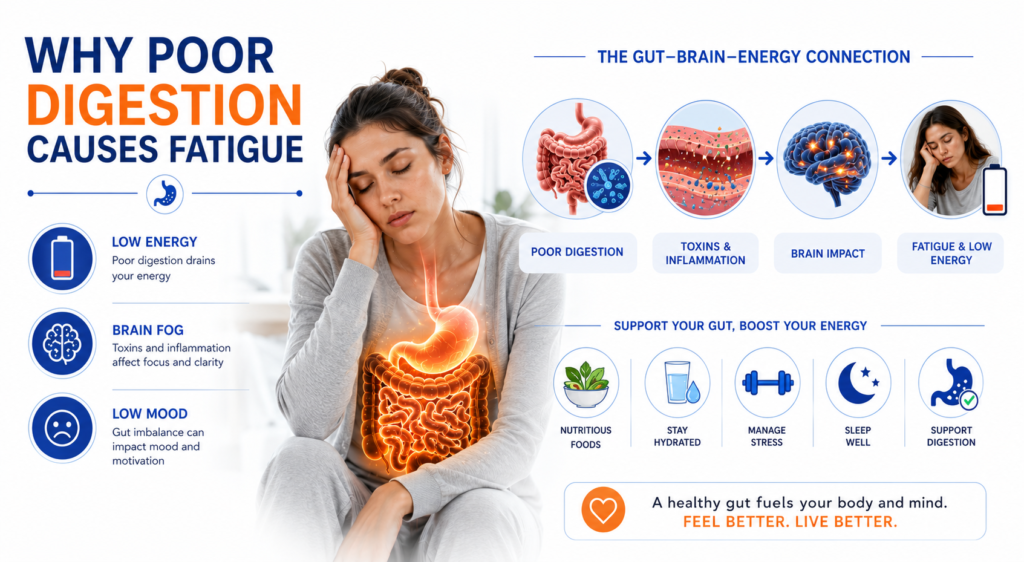
Fatigue is often blamed on poor sleep, stress, lack of exercise, or a busy lifestyle. While these are common reasons, one overlooked cause is poor digestion. Your digestive system does much more than break down food. It helps absorb nutrients, supports immune function, regulates inflammation, communicates with the brain, and influences energy production at the cellular level.
When digestion is weak or disrupted, the body may struggle to convert food into usable energy. This can leave you feeling tired, heavy, foggy, bloated, or mentally drained even after eating “enough.” In many cases, fatigue is not just about how much food you eat, but how well your body digests, absorbs, and uses nutrients.
According to the basic concept of digestion, food must be broken down into smaller nutrients before the body can absorb and use it. If this process is disturbed, energy production can suffer.
Understanding the Link Between Digestion and Energy
Your body gets energy from carbohydrates, fats, and proteins. However, these nutrients are not useful until they are properly digested and absorbed. Carbohydrates are broken down into glucose, fats into fatty acids, and proteins into amino acids. These nutrients then enter the bloodstream and support metabolism, tissue repair, hormone production, and cellular energy.
If digestion is poor, several problems can happen:
| Digestive Problem | How It May Cause Fatigue |
|---|---|
| Poor nutrient absorption | Body may lack iron, B vitamins, magnesium, or protein needed for energy |
| Bloating and slow digestion | Body may feel heavy, sluggish, and uncomfortable |
| Gut inflammation | Immune system may stay active, increasing tiredness |
| Blood sugar swings | Energy may rise and crash quickly |
| Gut microbiome imbalance | May affect mood, immunity, and energy regulation |
| Food intolerances | Can trigger discomfort, inflammation, and brain fog |
The digestive system and energy system are deeply connected. When digestion is inefficient, the body may spend more effort managing discomfort, inflammation, and nutrient gaps instead of supporting steady energy.
1. Poor Digestion Can Reduce Nutrient Absorption
One of the biggest reasons poor digestion causes fatigue is nutrient malabsorption. Even if you eat a healthy diet, your body must absorb those nutrients properly. If the gut lining, stomach acid, digestive enzymes, bile flow, or intestinal movement are not working well, nutrient absorption may become less efficient.
Important energy-supporting nutrients include:
| Nutrient | Role in Energy | Deficiency May Cause |
|---|---|---|
| Iron | Helps carry oxygen in the blood | Weakness, tiredness, dizziness |
| Vitamin B12 | Supports nerve health and red blood cell formation | Fatigue, brain fog, numbness |
| Folate | Helps make healthy blood cells | Low energy, weakness |
| Magnesium | Supports muscle and nerve function | Cramps, tiredness, poor sleep |
| Protein | Builds enzymes, muscles, and hormones | Weakness, poor recovery |
| Vitamin D | Supports immunity and muscle function | Low mood, weakness, tiredness |
The NIH Office of Dietary Supplements provides detailed information on vitamins and minerals, including their role in energy metabolism and health. For example, vitamin B12 and iron are especially important because they help support red blood cell function and oxygen delivery.
When the body does not get or absorb enough of these nutrients, the cells may not receive what they need to produce energy efficiently. This can lead to constant tiredness, poor focus, and low stamina.
2. Low Stomach Acid May Affect Digestion and Energy
Stomach acid is often misunderstood. Many people think acid is only harmful, but healthy stomach acid is necessary for proper digestion. It helps break down protein, activate digestive enzymes, and support absorption of nutrients such as iron, calcium, and vitamin B12.
When stomach acid is too low, food may sit longer in the stomach, causing bloating, heaviness, burping, or discomfort. Poor protein breakdown may also affect muscle repair, immune function, and enzyme production.
Possible signs of weak stomach digestion may include:
| Possible Sign | What It May Suggest |
|---|---|
| Feeling full quickly | Slow stomach emptying or weak digestion |
| Bloating after meals | Food not breaking down efficiently |
| Burping or heaviness | Delayed digestion |
| Fatigue after eating | Body working harder to digest |
| Undigested food in stool | Incomplete breakdown or absorption |
Not every case of bloating or fatigue is caused by low stomach acid, but it is one possible part of poor digestion. Anyone with ongoing symptoms should speak with a healthcare professional instead of self-diagnosing.
3. Poor Gut Health May Increase Inflammation

Your digestive tract plays a major role in immune health. A large part of the immune system is connected to the gut. When the digestive system is irritated by poor diet, infections, food sensitivities, alcohol, stress, or imbalance in gut bacteria, inflammation may increase.
Inflammation is one reason people feel tired during illness. Even mild, ongoing inflammation can make the body feel drained. The immune system uses energy to respond to irritation, repair tissues, and defend against harmful substances.
The gut microbiota also plays an important role in digestion, immunity, and metabolic health. A balanced microbiome helps break down certain fibers, produce beneficial compounds, and support the gut barrier. When gut bacteria become imbalanced, digestion and energy regulation may be affected.
Common factors that may disturb gut balance include:
| Factor | Possible Gut Effect |
|---|---|
| High-sugar diet | May promote unhealthy bacterial imbalance |
| Low-fiber diet | Reduces fuel for beneficial gut bacteria |
| Frequent alcohol intake | Can irritate the digestive lining |
| Chronic stress | May alter gut movement and sensitivity |
| Poor sleep | May affect gut rhythm and inflammation |
| Unnecessary antibiotic use | May reduce beneficial bacteria |
A healthy gut barrier helps control what enters the bloodstream. If the gut lining becomes irritated or more permeable, immune reactions may increase. This does not mean every digestive issue causes “leaky gut,” but research suggests gut barrier function is important for immune and metabolic health.
4. Blood Sugar Swings Can Make You Feel Tired
Poor digestion can also affect blood sugar balance. When meals are high in refined carbohydrates or added sugar, glucose may rise quickly and then fall. This “crash” can lead to tiredness, hunger, irritability, poor concentration, and cravings.
Slow or irregular digestion may also affect how quickly nutrients enter the bloodstream. For some people, large meals, low-protein meals, or meals lacking fiber may worsen energy crashes.
A more balanced meal usually includes:
| Meal Component | Why It Helps |
|---|---|
| Protein | Slows digestion and supports fullness |
| Fiber | Helps steady blood sugar and feeds gut bacteria |
| Healthy fats | Supports satiety and hormone function |
| Complex carbs | Provide longer-lasting energy |
| Water | Supports digestion and circulation |
For example, a breakfast of white bread and sugary tea may give quick energy but may not keep you full for long. A meal with eggs or lentils, whole grains, vegetables, and water may support steadier energy.
5. Poor Digestion Can Disrupt Sleep
Digestive discomfort can disturb sleep, and poor sleep can worsen fatigue. Acid reflux, bloating, gas, constipation, and stomach heaviness may make it harder to fall asleep or stay asleep.
The NIDDK provides reliable information about digestive diseases, including conditions such as GERD, constipation, irritable bowel syndrome, and other gut-related disorders.
Eating very late at night, overeating, or lying down soon after meals may worsen reflux or indigestion for some people. When sleep quality becomes poor, the body has less time for repair, hormone regulation, and nervous system recovery.
Helpful habits may include:
| Habit | Why It May Help |
|---|---|
| Eat dinner 2–3 hours before bed | Gives the stomach time to empty |
| Avoid heavy fried meals at night | Reduces digestive burden |
| Limit late caffeine | Supports better sleep quality |
| Sleep slightly elevated if reflux occurs | May reduce nighttime acid symptoms |
| Keep meal timing consistent | Supports gut rhythm |
If digestive symptoms repeatedly disturb sleep, it is important to seek medical advice.
6. Constipation Can Make the Body Feel Heavy and Sluggish
Constipation is more than an uncomfortable bathroom issue. When bowel movements are infrequent or difficult, people may feel bloated, heavy, low in appetite, and tired. Constipation can also affect mood and mental clarity.
Common causes of constipation include low fiber intake, dehydration, inactivity, stress, certain medications, and ignoring the urge to pass stool.
The Mayo Clinic explains that constipation may involve fewer than three bowel movements per week, hard stools, straining, or a feeling of incomplete emptying.
To support regular digestion:
| Strategy | Example |
|---|---|
| Increase fiber gradually | Vegetables, fruits, oats, legumes, seeds |
| Drink enough water | Especially when increasing fiber |
| Move daily | Walking can support bowel movement |
| Keep a routine | Try using the bathroom at a regular time |
| Avoid ignoring urges | Delaying can worsen constipation |
Fiber should be increased slowly. Suddenly adding too much fiber can cause gas or bloating, especially if the gut is sensitive.
7. Food Intolerances and Sensitivities May Trigger Fatigue
Some people feel tired after eating specific foods. This can happen with lactose intolerance, gluten-related disorders, high-FODMAP foods, or other sensitivities. Food intolerance does not always mean allergy. It may simply mean the body has difficulty digesting certain components.
Common symptoms may include:
| Symptom | Possible Connection |
|---|---|
| Bloating | Poor breakdown of certain carbohydrates |
| Gas | Fermentation by gut bacteria |
| Diarrhea | Irritation or poor absorption |
| Brain fog | Possible gut-immune or blood sugar response |
| Fatigue after meals | Digestive stress or inflammatory response |
For example, lactose intolerance occurs when the body has trouble digesting lactose, the sugar found in milk. Gluten-related disorders, such as celiac disease, require medical testing and proper diagnosis.
People should avoid removing large food groups without guidance unless symptoms are clear and short-term tracking is being done. A food diary can help identify patterns.
8. Gut-Brain Communication Can Affect Mood and Energy
The gut and brain communicate through nerves, hormones, immune signals, and microbial metabolites. This connection is often called the gut-brain axis. When digestion is uncomfortable, the nervous system may become more stressed. Stress can slow digestion, and poor digestion can increase stress, creating a cycle.
The gut-brain axis is an important area of research because it shows that digestive health may influence mood, stress response, and mental energy.
People with poor digestion may experience:
| Gut Issue | Possible Mental/Energy Effect |
|---|---|
| Bloating | Irritability or discomfort |
| IBS-like symptoms | Anxiety around meals |
| Poor microbiome balance | Low mood or brain fog |
| Chronic digestive pain | Sleep disturbance and fatigue |
| Irregular bowel habits | Reduced daily comfort and productivity |
This does not mean digestion is the only cause of mood or fatigue issues. However, gut discomfort can clearly affect quality of life and daily energy.
9. Poor Digestion May Increase Post-Meal Fatigue
Feeling slightly relaxed after a meal is normal. But feeling extremely sleepy, heavy, or drained after eating may suggest digestive stress, blood sugar swings, or meal imbalance.
Common reasons include:
| Cause | Why It Happens |
|---|---|
| Very large meals | More blood flow and energy used for digestion |
| High-sugar meals | Energy spike followed by crash |
| Low protein | Less stable blood sugar and fullness |
| High-fat fried foods | Slower stomach emptying |
| Food intolerance | Digestive discomfort and immune response |
| Dehydration | Poor circulation and sluggish digestion |
To reduce post-meal fatigue, focus on smaller balanced meals, chew food properly, avoid overeating, and include protein, fiber, and healthy fats.
Best Habits to Improve Digestion and Energy Naturally

Improving digestion does not always require complicated supplements. Many people benefit from basic lifestyle habits.
1. Chew Food Properly
Digestion begins in the mouth. Chewing breaks food into smaller pieces and mixes it with saliva. Eating too fast may increase bloating, overeating, and poor digestion.
2. Eat More Fiber-Rich Foods
Fiber supports bowel regularity and feeds beneficial gut bacteria. Good sources include vegetables, fruits, oats, beans, lentils, chia seeds, flaxseeds, and whole grains.
3. Stay Hydrated
Water helps move food through the digestive tract and supports nutrient transport. Dehydration can worsen constipation and fatigue.
4. Include Protein in Each Meal
Protein supports muscle repair, enzymes, hormones, and steady energy. Good sources include eggs, fish, chicken, yogurt, tofu, paneer, lentils, beans, and nuts.
5. Reduce Ultra-Processed Foods
Highly processed foods may be low in fiber and high in sugar, unhealthy fats, additives, and salt. These can contribute to poor digestion and energy crashes.
6. Manage Stress
Stress can slow or speed digestion, increase gut sensitivity, and worsen bloating. Walking, breathing exercises, meditation, prayer, stretching, and sleep routines may help.
7. Move Daily
Physical activity supports bowel movement, blood sugar balance, mood, and energy metabolism. Even a 20–30 minute walk after meals can be helpful.
8. Improve Sleep Quality
Poor sleep affects hunger hormones, blood sugar, gut bacteria, and inflammation. A consistent sleep schedule supports both digestion and energy.
When to Seek Medical Help
Poor digestion with fatigue should not be ignored if it is frequent, severe, or worsening. Sometimes fatigue and digestive symptoms may be linked to medical conditions such as anemia, thyroid disorders, celiac disease, inflammatory bowel disease, liver problems, infections, diabetes, or chronic stress disorders.
Seek medical advice if you experience:
| Warning Sign | Why It Matters |
|---|---|
| Unexplained weight loss | May suggest serious digestive or metabolic issue |
| Blood in stool | Needs medical evaluation |
| Persistent vomiting | Can cause dehydration and nutrient loss |
| Severe abdominal pain | May indicate urgent digestive problems |
| Ongoing diarrhea | Can cause dehydration and malabsorption |
| Extreme fatigue | May suggest anemia, thyroid issues, or chronic illness |
| Difficulty swallowing | Needs medical attention |
| Symptoms lasting weeks | Should be properly diagnosed |
Do not rely only on online information if symptoms are persistent. A healthcare provider may recommend blood tests, stool tests, food intolerance assessment, or digestive evaluation depending on symptoms.
Final Thoughts
Poor digestion can cause fatigue because the gut is directly connected to nutrient absorption, blood sugar balance, inflammation, sleep quality, immune function, and brain health. When food is not broken down and absorbed properly, the body may not get enough raw materials to produce steady energy. Digestive discomfort can also disturb sleep, increase stress, and make the body feel heavy and sluggish.
The good news is that many digestion-related energy problems can improve with simple habits: eating balanced meals, chewing slowly, drinking enough water, increasing fiber gradually, managing stress, moving daily, and improving sleep. However, if fatigue is severe or digestive symptoms continue, medical evaluation is important to rule out underlying conditions.
A healthy gut does not only support better digestion. It can also support better energy, clearer thinking, stronger immunity, and overall well-being.
Scientific References and Trusted Sources
- Wikipedia – Digestion: https://en.wikipedia.org/wiki/Digestion
- Wikipedia – Gut Microbiota: https://en.wikipedia.org/wiki/Gut_microbiota
- Wikipedia – Gut-Brain Axis: https://en.wikipedia.org/wiki/Gut%E2%80%93brain_axis
- NIH Office of Dietary Supplements: https://ods.od.nih.gov/
- National Institute of Diabetes and Digestive and Kidney Diseases: https://www.niddk.nih.gov/
- Mayo Clinic – Constipation and digestive health: https://www.mayoclinic.org/
- Camilleri M. “Leaky gut: mechanisms, measurement and clinical implications in humans.” Gut. 2019;68(8):1516–1526.
- Mayer EA, Tillisch K, Gupta A. “Gut/brain axis and the microbiota.” Journal of Clinical Investigation. 2015;125(3):926–938.
- Valdes AM, Walter J, Segal E, Spector TD. “Role of the gut microbiota in nutrition and health.” BMJ. 2018;361:k2179.

Emily Carter is a Senior Health Researcher and Supplement Analyst at the Nutrasfit Research Team, based in Austin, Texas. She specializes in evaluating dietary supplements through ingredient analysis, scientific research, and real-world effectiveness.
With a background in nutrition science, Emily focuses on breaking down complex health information into simple, practical insights that readers can trust. Her work is centered on helping individuals make informed decisions and choose supplements that are safe, effective, and aligned with their health goals.