
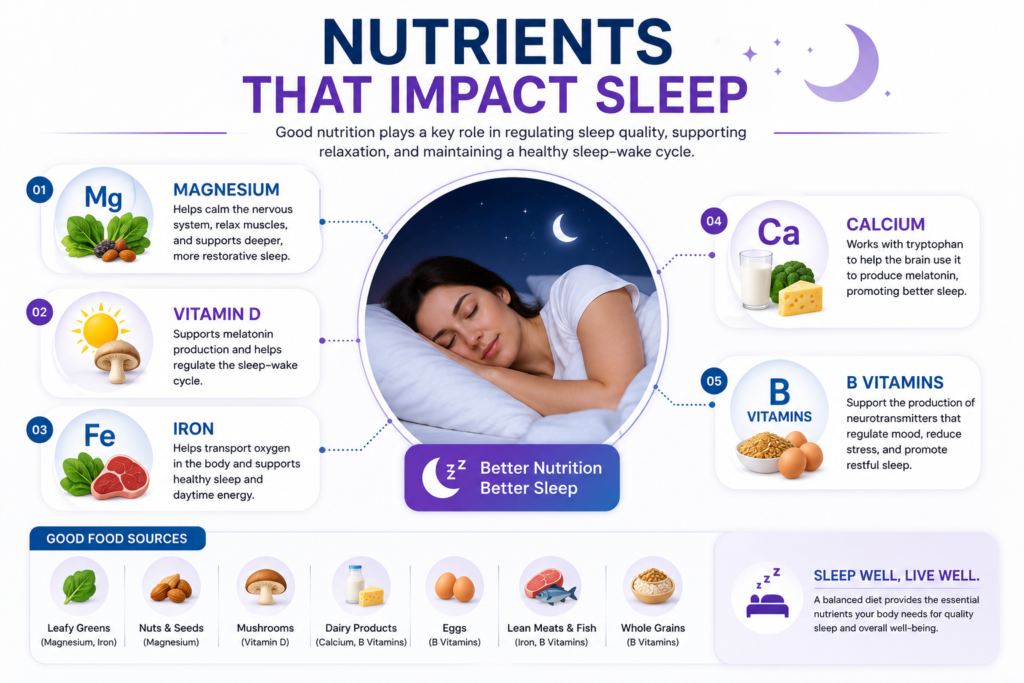
Sleep quality is not controlled by one single factor. Stress, screen time, hormones, medical conditions, caffeine, alcohol, irregular routines, and mental health can all affect how well you sleep. However, one often-overlooked factor is nutrient status. Your body needs certain vitamins, minerals, amino acids, and fatty acids to produce sleep-related hormones, calm the nervous system, regulate muscle function, support brain chemistry, and maintain healthy circadian rhythm.
When key nutrients are low, sleep may become lighter, more restless, or harder to maintain. Some people may struggle to fall asleep, wake up often during the night, feel tired even after sleeping, experience leg discomfort, or feel mentally wired at bedtime.
This article explains the most important nutrient deficiencies that may affect sleep quality, how they work in the body, food sources, warning signs, and when to consider medical testing.
Important note: This content is for educational purposes only. Nutrient deficiencies should be confirmed through proper medical evaluation, especially before taking high-dose supplements.
How Nutrients Influence Sleep Quality
Sleep is a biological process controlled by the brain, hormones, nerves, muscles, and metabolism. Nutrients support many of these systems. For example, your body needs magnesium for nervous system relaxation, iron for dopamine function, vitamin D for immune and circadian regulation, and B vitamins for neurotransmitter production.
According to the Wikipedia overview of sleep, sleep plays a major role in brain function, recovery, memory, immune health, and metabolic regulation. When nutrient levels are poor, the body may struggle to enter deep, restorative sleep stages.
Nutrients can affect sleep through several pathways:
| Sleep Function | Nutrients Involved | Why It Matters |
| Melatonin production | Vitamin B6, magnesium, tryptophan | Helps regulate sleep-wake timing |
| Nervous system relaxation | Magnesium, calcium, potassium | Helps reduce restlessness and muscle tension |
| Oxygen transport | Iron, vitamin B12, folate | Low levels may cause fatigue and restless sleep |
| Mood and stress balance | B vitamins, omega-3s, magnesium | Supports calmness and emotional regulation |
| Muscle comfort | Magnesium, potassium, calcium | May reduce cramps and nighttime discomfort |
| Circadian rhythm support | Vitamin D, melatonin-related nutrients | Helps maintain healthy sleep timing |
1. Magnesium Deficiency and Poor Sleep
Magnesium is one of the most discussed minerals when it comes to sleep quality. It supports more than 300 biochemical reactions in the body and plays a major role in nerve function, muscle relaxation, and stress regulation.
Magnesium may support sleep by helping regulate neurotransmitters such as GABA, which calms brain activity. Low magnesium levels may make the nervous system more excitable, which can contribute to restlessness, difficulty relaxing, muscle tightness, and poor sleep quality.
The NIH Office of Dietary Supplements magnesium fact sheet explains that magnesium is important for muscle and nerve function, blood glucose control, and blood pressure regulation.
Possible Sleep-Related Signs of Low Magnesium
| Possible Sign | How It May Affect Sleep |
| Muscle cramps | May wake you at night |
| Restlessness | Makes it harder to settle down |
| Anxiety-like tension | Can delay sleep onset |
| Light sleep | May reduce sleep satisfaction |
| Fatigue | May continue even after sleeping |
A clinical trial published in Journal of Research in Medical Sciences found that magnesium supplementation improved some measures of insomnia in older adults, including sleep time and sleep efficiency. While this does not mean magnesium is a cure for insomnia, it suggests that low magnesium status may be relevant for some people.
Food Sources of Magnesium
Good food sources include pumpkin seeds, almonds, spinach, cashews, black beans, dark chocolate, avocado, whole grains, and legumes.
| Food | Why It Helps |
| Pumpkin seeds | Very rich in magnesium |
| Spinach | Provides magnesium and folate |
| Almonds | Magnesium plus healthy fats |
| Black beans | Magnesium, fiber, and plant protein |
| Whole grains | Support steady blood sugar overnight |
2. Vitamin D Deficiency and Sleep Problems
Vitamin D is widely known for bone health, but it may also influence sleep quality. Vitamin D receptors are found in areas of the brain involved in sleep regulation. Low vitamin D levels have been associated with shorter sleep duration, poorer sleep quality, and sleep disorders in some observational studies.
The NIH vitamin D fact sheet explains that vitamin D supports calcium absorption, bone health, immune function, and cellular processes. The Wikipedia page on vitamin D also describes its role as a fat-soluble vitamin and hormone-like nutrient.
A systematic review and meta-analysis published in Nutrients in 2018 reported an association between vitamin D deficiency and sleep disorders. However, researchers also note that more controlled studies are needed to confirm whether improving vitamin D directly improves sleep in every person.
Why Low Vitamin D May Affect Sleep
Vitamin D may influence sleep through immune regulation, inflammation control, mood balance, and circadian rhythm pathways. People with low vitamin D may also experience muscle aches, low mood, fatigue, and general body discomfort, all of which can reduce sleep quality.
Common Risk Factors for Low Vitamin D
| Risk Factor | Why It Matters |
| Limited sunlight exposure | Skin makes vitamin D through sunlight |
| Darker skin tone | More melanin can reduce vitamin D production |
| Indoor lifestyle | Less natural light exposure |
| Older age | Skin produces vitamin D less efficiently |
| Low dietary intake | Few foods naturally contain vitamin D |
Food Sources of Vitamin D
Vitamin D is found in fatty fish, egg yolks, fortified milk, fortified plant milks, fortified cereals, and mushrooms exposed to UV light. However, diet alone may not be enough for some people, so testing is useful before supplementation.
3. Iron Deficiency and Restless Sleep
Iron deficiency is one of the most important nutrient problems linked with restless sleep, especially when it contributes to restless legs syndrome. Restless legs syndrome causes uncomfortable leg sensations and an urge to move the legs, often worse at night. This can make falling asleep difficult and may cause repeated awakenings.
Iron is needed for oxygen transport and dopamine function. Dopamine is involved in movement control and nervous system signaling. Low iron stores, even without severe anemia, may contribute to restless legs symptoms in some individuals.
The NIH iron fact sheet explains that iron is necessary for hemoglobin production and oxygen transport. The Wikipedia page on iron deficiency provides a general overview of low iron status and its health effects.
Sleep-Related Signs That May Suggest Low Iron
| Possible Sign | Sleep Connection |
| Restless legs at night | Makes it hard to fall asleep |
| Frequent waking | Leg discomfort may interrupt sleep |
| Daytime fatigue | Poor oxygen transport and poor sleep |
| Cold hands or feet | May reflect circulation or anemia issues |
| Shortness of breath on exertion | Can occur with iron deficiency anemia |
People at higher risk include menstruating women, pregnant women, people with heavy periods, vegetarians or vegans with low iron intake, athletes, and people with digestive conditions that reduce absorption.
Food Sources of Iron
| Heme Iron Sources | Non-Heme Iron Sources |
| Red meat | Lentils |
| Poultry | Beans |
| Fish | Spinach |
| Eggs | Tofu |
| Shellfish | Pumpkin seeds |
Non-heme iron from plant foods is better absorbed when eaten with vitamin C-rich foods like lemon, oranges, bell peppers, or amla. Tea and coffee may reduce iron absorption if consumed with meals.
4. Vitamin B12 Deficiency and Sleep-Wake Disruption
Vitamin B12 is essential for nerve health, red blood cell formation, and brain function. Low vitamin B12 can cause fatigue, weakness, numbness, tingling, mood changes, memory issues, and in some cases sleep disturbance.
B12 may influence sleep indirectly through its role in nervous system function and circadian rhythm regulation. Some people with B12 deficiency feel exhausted during the day but still struggle to sleep well at night. Others may experience nerve discomfort, mood changes, or low energy that affects their daily rhythm.
The NIH vitamin B12 fact sheet explains that B12 is important for DNA synthesis and neurological function. The Wikipedia page on vitamin B12 also gives a detailed overview of its biological role.
Who Is at Risk of B12 Deficiency?
| Risk Group | Reason |
| Vegans and strict vegetarians | B12 is mainly found in animal foods |
| Older adults | Absorption may decrease with age |
| People on metformin | Long-term use may reduce B12 levels |
| People using acid-reducing medicines | Stomach acid helps B12 absorption |
| Digestive disorders | May reduce nutrient absorption |
Food Sources of Vitamin B12
B12 is found in fish, eggs, dairy products, poultry, meat, and fortified foods. People following a vegan diet often need fortified foods or supplements, but testing and medical guidance are recommended.
5. Vitamin B6 Deficiency and Melatonin Production
Vitamin B6 is involved in the production of neurotransmitters such as serotonin and GABA. Serotonin is also used by the body to make melatonin, the hormone that helps regulate sleep timing.
Low vitamin B6 may affect mood, stress tolerance, and sleep-related hormone pathways. While vitamin B6 deficiency is not the most common cause of poor sleep, it can contribute when combined with low protein intake, stress, poor diet quality, or other nutrient deficiencies.
Possible Signs of Low Vitamin B6
| Sign | Possible Sleep Impact |
| Irritability | May increase nighttime mental activity |
| Low mood | Can disturb sleep patterns |
| Fatigue | May worsen daytime sleepiness |
| Cracks around the mouth | Possible deficiency sign |
| Nerve symptoms | May cause discomfort |
Food Sources of Vitamin B6
Vitamin B6 is found in chickpeas, bananas, potatoes, salmon, tuna, poultry, fortified cereals, and sunflower seeds.
A balanced dinner containing protein, complex carbohydrates, and B6-rich foods may help support normal neurotransmitter production. However, high-dose B6 supplements should be avoided unless advised by a healthcare professional, because excessive intake may cause nerve problems.
6. Calcium Deficiency and Nighttime Restlessness
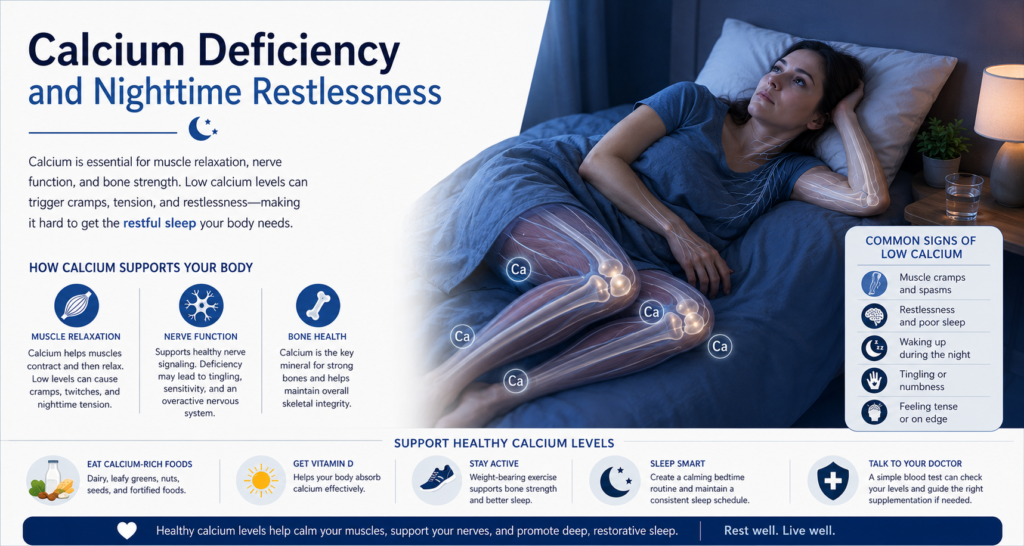
Calcium is commonly associated with bones, but it also plays an important role in muscle contraction, nerve signaling, and relaxation. Calcium helps the brain use tryptophan to produce melatonin. Low calcium may contribute to muscle cramps, restlessness, or poor sleep in some people.
Calcium works closely with vitamin D and magnesium. If vitamin D is low, calcium absorption may also be affected. If magnesium is low, calcium balance and muscle relaxation may be disturbed.
Calcium and Sleep Connection
| Function | Sleep Relevance |
| Muscle function | May reduce cramps and discomfort |
| Nerve signaling | Supports stable nervous system activity |
| Melatonin pathway | Helps sleep-wake regulation |
| Bone and body comfort | May reduce aches that disturb sleep |
Food Sources of Calcium
Good sources include milk, yogurt, cheese, fortified plant milk, tofu made with calcium, sesame seeds, almonds, sardines with bones, and leafy greens such as kale.
7. Potassium Deficiency and Nighttime Muscle Cramps
Potassium is an electrolyte that supports muscle contraction, nerve signals, and fluid balance. Low potassium may contribute to muscle weakness, cramps, irregular heartbeat sensations, and fatigue. Nighttime cramps or muscle discomfort can disturb sleep and make the body feel restless.
Potassium levels can be affected by low intake, heavy sweating, vomiting, diarrhea, certain medications, and dehydration. Because potassium levels can become dangerous when too high or too low, supplementation should only be done with medical guidance.
Food Sources of Potassium
| Food | Benefit |
| Bananas | Easy potassium source |
| Potatoes | Rich in potassium and carbohydrates |
| Coconut water | Provides electrolytes |
| Lentils | Potassium plus protein |
| Spinach | Potassium, magnesium, and folate |
| Yogurt | Potassium and calcium |
8. Omega-3 Fatty Acid Deficiency and Sleep Quality
Omega-3 fatty acids are essential fats that support brain health, inflammation balance, heart health, and mood regulation. Low omega-3 intake may indirectly affect sleep through mood, stress response, and inflammatory pathways.
Some research suggests that omega-3 status may be associated with sleep duration and sleep quality, though more studies are needed. Omega-3s may also support serotonin pathways, which are connected to melatonin production.
Omega-3 Food Sources
| Source | Type |
| Salmon | EPA and DHA |
| Sardines | EPA and DHA |
| Mackerel | EPA and DHA |
| Chia seeds | ALA |
| Flaxseeds | ALA |
| Walnuts | ALA |
Plant-based omega-3s provide ALA, which the body converts only partly into EPA and DHA. People who do not eat fish may consider algae-based omega-3 after consulting a healthcare professional.
9. Protein and Tryptophan Deficiency
Protein provides amino acids, including tryptophan. Tryptophan is used to produce serotonin and melatonin. Very low protein intake or poor-quality diets may affect mood, energy, recovery, and sleep regulation.
This does not mean that eating a heavy protein meal right before bed is necessary. In fact, very heavy meals late at night may disturb sleep. The better strategy is to eat enough protein throughout the day and include balanced evening meals.
Tryptophan-Rich Foods
| Food | Notes |
| Eggs | Protein and B vitamins |
| Milk | Protein, calcium, tryptophan |
| Yogurt | Protein plus gut support |
| Turkey/chicken | High-quality protein |
| Pumpkin seeds | Tryptophan and magnesium |
| Soy foods | Good plant-based option |
| Lentils | Protein and minerals |
A balanced dinner with complex carbohydrates may help tryptophan enter the brain more effectively. Examples include dal with rice, yogurt with oats, tofu with vegetables, or eggs with whole-grain toast.
10. Folate Deficiency and Sleep Disturbance
Folate, also known as vitamin B9, supports red blood cell production, DNA synthesis, and brain chemistry. Low folate may contribute to fatigue, low mood, irritability, and poor concentration, all of which may affect sleep quality.
Folate works closely with vitamin B12. If either nutrient is low, energy levels and nervous system health may suffer.
Folate Food Sources
Good sources include leafy greens, lentils, beans, chickpeas, asparagus, avocado, oranges, and fortified grains.
Nutrient Deficiencies and Sleep Symptoms: Quick Comparison Table
| Nutrient Deficiency | Common Sleep-Related Problem | Other Possible Signs | Food Sources |
| Magnesium | Restlessness, light sleep | Cramps, tension, fatigue | Nuts, seeds, spinach, beans |
| Vitamin D | Poor sleep quality, fatigue | Body aches, low mood | Sunlight, fish, eggs, fortified foods |
| Iron | Restless legs, waking often | Fatigue, pale skin, weakness | Meat, lentils, beans, spinach |
| Vitamin B12 | Fatigue with disturbed sleep | Tingling, memory issues, weakness | Eggs, dairy, fish, fortified foods |
| Vitamin B6 | Poor melatonin support | Irritability, low mood | Chickpeas, bananas, potatoes |
| Calcium | Cramps, restlessness | Bone weakness, muscle issues | Dairy, tofu, sesame, leafy greens |
| Potassium | Night cramps | Weakness, fatigue | Bananas, potatoes, lentils |
| Omega-3 | Mood-related sleep issues | Dry skin, inflammation, low mood | Fish, chia, flax, walnuts |
| Folate | Fatigue and low mood | Poor concentration, weakness | Greens, lentils, beans |
How to Know If Nutrient Deficiency Is Affecting Your Sleep
Poor sleep does not automatically mean you have a nutrient deficiency. However, deficiency may be worth investigating if sleep problems appear along with fatigue, weakness, cramps, restless legs, hair fall, low mood, pale skin, frequent illness, or numbness and tingling.
A healthcare professional may recommend blood tests such as:
| Test | What It May Check |
| CBC | Anemia and red blood cell health |
| Ferritin | Iron storage levels |
| Vitamin D test | 25-hydroxy vitamin D level |
| Vitamin B12 | B12 status |
| Folate | Vitamin B9 status |
| Magnesium | Sometimes checked, though blood levels may not show total body stores |
| Thyroid panel | To rule out thyroid-related fatigue or sleep issues |
Testing is especially important before taking iron, vitamin D, potassium, or high-dose B vitamins.
Practical Diet Tips to Support Better Sleep
Food cannot replace proper sleep hygiene, but it can support the body’s natural sleep systems. A nutrient-rich diet may help improve energy rhythm, reduce restlessness, and support relaxation.
1. Build a Sleep-Supportive Plate
Try to include protein, fiber-rich carbohydrates, healthy fats, and mineral-rich foods. For example:
| Meal Idea | Sleep-Supportive Nutrients |
| Dal, rice, spinach, curd | Magnesium, protein, calcium, folate |
| Oats with nuts and banana | Magnesium, potassium, tryptophan |
| Eggs with whole-grain toast | B vitamins, protein |
| Salmon with sweet potato | Omega-3, potassium, vitamin D |
| Tofu with vegetables | Calcium, protein, magnesium |
2. Avoid Nutrient-Poor Late-Night Eating
Large amounts of sugar, fried foods, alcohol, and heavy meals close to bedtime may disturb digestion and sleep quality. A small balanced snack is better than a heavy meal if you feel hungry at night.
3. Be Careful With Caffeine Timing
Caffeine can remain active for several hours. Even if you fall asleep after tea or coffee, sleep depth may be reduced. People with insomnia symptoms often benefit from avoiding caffeine after early afternoon.
4. Support Gut Health
Gut health may influence nutrient absorption and sleep-related pathways. Include fiber-rich foods, fermented foods like yogurt, and a variety of fruits and vegetables.
5. Do Not Overuse Supplements
More is not always better. High-dose supplements can cause side effects or interact with medications. Iron overload, excessive vitamin D, too much potassium, and high-dose B6 can be harmful.
When to Seek Medical Help

You should speak with a healthcare professional if sleep problems last longer than a few weeks, affect daily life, or come with symptoms such as severe fatigue, chest discomfort, shortness of breath, depression, anxiety, loud snoring, choking during sleep, restless legs, unexplained weight changes, or numbness.
Nutrient deficiencies are only one possible cause of poor sleep. Sleep apnea, thyroid disorders, anxiety, depression, chronic pain, medication side effects, and hormonal changes can also affect sleep.
Final Thoughts
Nutrient deficiencies can quietly affect sleep quality by disturbing nervous system balance, muscle comfort, hormone production, oxygen transport, and mood regulation. Magnesium, vitamin D, iron, vitamin B12, vitamin B6, calcium, potassium, omega-3 fatty acids, protein, and folate are among the most important nutrients connected with restful sleep.
The best approach is not to guess or take random supplements. Instead, focus on a nutrient-dense diet, improve sleep hygiene, manage stress, and consider testing if symptoms suggest deficiency. When your body receives the nutrients it needs, it becomes easier to relax, recover, and wake up feeling more refreshed.
Scientific References and Trusted Sources
- Abbasi B, Kimiagar M, Sadeghniiat K, et al. “The effect of magnesium supplementation on primary insomnia in elderly: A double-blind placebo-controlled clinical trial.” Journal of Research in Medical Sciences. 2012.
- Rondanelli M, Opizzi A, Monteferrario F, et al. “The effect of melatonin, magnesium, and zinc on primary insomnia in long-term care facility residents.” Journal of the American Geriatrics Society. 2011.
- Gao Q, Kou T, Zhuang B, et al. “The association between vitamin D deficiency and sleep disorders: A systematic review and meta-analysis.” Nutrients. 2018.
- Trotti LM, Bhadriraju S, Becker LA. “Iron for restless legs syndrome.” Cochrane Database of Systematic Reviews. 2019.
- Peuhkuri K, Sihvola N, Korpela R. “Diet promotes sleep duration and quality.” Nutrition Research. 2012.
- St-Onge MP, Roberts A, Shechter A, Choudhury AR. “Fiber and saturated fat are associated with sleep arousals and slow wave sleep.” Journal of Clinical Sleep Medicine. 2016.
- NIH Magnesium Fact Sheet: https://ods.od.nih.gov/factsheets/Magnesium-Consumer/
- NIH Vitamin D Fact Sheet: https://ods.od.nih.gov/factsheets/VitaminD-Consumer/
- NIH Iron Fact Sheet: https://ods.od.nih.gov/factsheets/Iron-Consumer/
- NIH Vitamin B12 Fact Sheet: https://ods.od.nih.gov/factsheets/VitaminB12-Consumer/
- Wikipedia: Sleep: https://en.wikipedia.org/wiki/Sleep
- Wikipedia: Vitamin D: https://en.wikipedia.org/wiki/Vitamin_D
- Wikipedia: Iron deficiency: https://en.wikipedia.org/wiki/Iron_deficiency
Wikipedia: Vitamin B12: https://en.wikipedia.org/wiki/Vitamin_B12

Emily Carter is a Senior Health Researcher and Supplement Analyst at the Nutrasfit Research Team, based in Austin, Texas. She specializes in evaluating dietary supplements through ingredient analysis, scientific research, and real-world effectiveness.
With a background in nutrition science, Emily focuses on breaking down complex health information into simple, practical insights that readers can trust. Her work is centered on helping individuals make informed decisions and choose supplements that are safe, effective, and aligned with their health goals.