
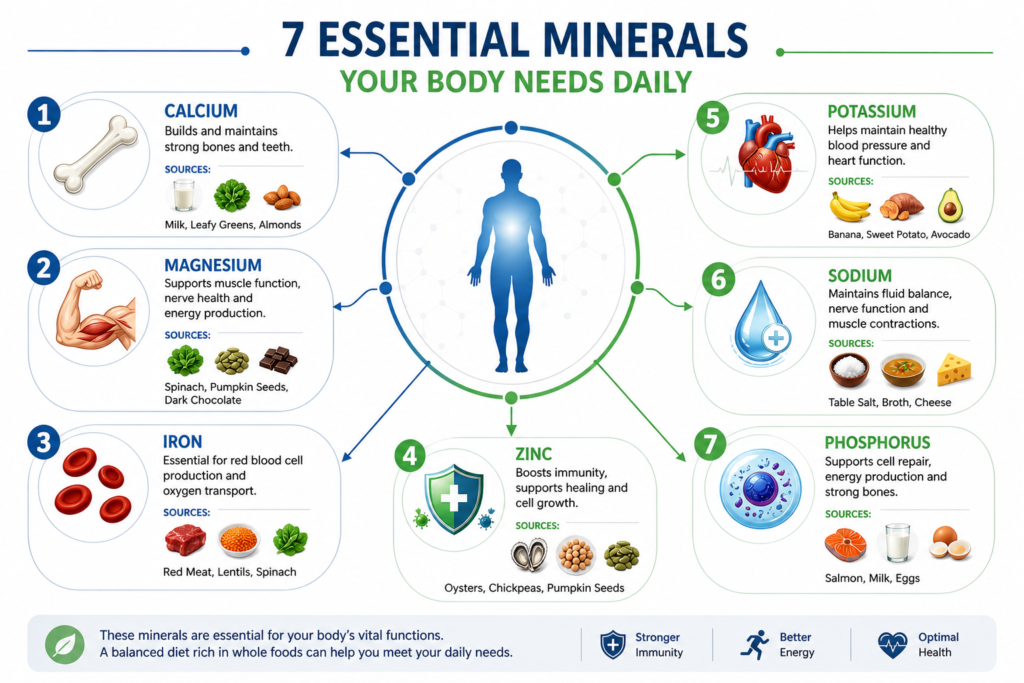
The human body is an infinitely complex biological machine. While macronutrients—carbohydrates, proteins, and fats—provide the caloric energy and structural building blocks we need to survive, micronutrients act as the critical spark plugs that make the entire metabolic engine run. Among these vital micronutrients, dietary minerals stand out as foundational pillars of health. Unlike vitamins, which are organic compounds that can be broken down by heat, air, or acid, minerals are inorganic elements that hold their chemical structure. From the calcium that fortifies our skeletal system to the zinc that governs our immune response, these elements are woven into the very fabric of our biology.
Despite their importance, mineral deficiencies remain a widespread global health issue. Modern agricultural practices have led to soil depletion, meaning the fruits and vegetables grown today often contain fewer minerals than they did decades ago. Furthermore, highly processed modern diets frequently strip away the natural nutrient profiles of whole foods. Understanding the specific roles, dietary sources, and biological mechanisms of these essential minerals is not just an academic exercise; it is a practical necessity for achieving and maintaining optimal health, longevity, and vitality.
This comprehensive guide explores seven of the most critical essential minerals your body demands on a daily basis. We will delve deeply into their physiological functions, recommended intakes, dietary sources, and the scientific literature that underscores their necessity.
The Foundation of Dietary Minerals
Before examining specific minerals, it is crucial to understand how they are categorized and utilized within the body. Dietary minerals are generally classified into two main categories based on the amounts the body requires:
- Macrominerals: These are required in larger amounts (typically more than 100 mg per day). They include calcium, phosphorus, magnesium, sodium, potassium, chloride, and sulfur.
- Trace Minerals (Microminerals): These are needed in minute quantities (usually less than 100 mg per day), yet they are no less critical to human survival. Examples include iron, zinc, selenium, iodine, copper, manganese, and fluoride.
According to the National Institutes of Health (NIH) Office of Dietary Supplements, the body utilizes these elements for a vast array of physiological processes, including bone remodeling, oxygen transport, fluid balance, and the facilitation of hundreds of enzymatic reactions.
A critical concept in mineral nutrition is bioavailability—the proportion of a consumed nutrient that is actually absorbed, assimilated, and utilized by the body. Just because a food contains a certain amount of a mineral does not mean your body will absorb 100% of it. Factors such as the chemical form of the mineral, the presence of absorption inhibitors (like phytates in grains and oxalates in leafy greens), and your individual gut microbiome health play massive roles in dictating how much of a mineral actually enters your bloodstream.
Below, we detail seven non-negotiable minerals you must acquire through your diet to ensure your biological systems operate at peak efficiency.
1. Calcium: The Architect of Skeletal Integrity
When most people think of calcium, they immediately envision strong bones and teeth. While this is entirely accurate—over 99% of the body’s calcium is stored in the skeletal system—the remaining 1% found in blood, muscle, and intracellular fluids is equally vital for survival.
Biological Role and Mechanism of Action
Calcium is the most abundant mineral in the human body. As described in scientific overviews found on Wikipedia’s Calcium in Biology page, calcium acts as a crucial second messenger in cellular signaling pathways. It is essential for muscle contraction; when a nerve impulse reaches a muscle fiber, calcium ions are released, binding to the protein troponin, which initiates the mechanical process of muscle contraction. Furthermore, calcium is heavily involved in blood clotting (the coagulation cascade), nerve impulse transmission, and the secretion of essential hormones like insulin.
The body maintains blood calcium levels within a highly rigid, narrow range. If your dietary intake of calcium falls short, the parathyroid glands secrete parathyroid hormone (PTH), which signals specialized cells called osteoclasts to break down bone tissue and release calcium into the bloodstream. Over time, this constant borrowing from the skeletal “bank” leads to osteopenia and osteoporosis.
Daily Requirements and Dietary Sources
The Recommended Dietary Allowance (RDA) for adult men and women aged 19–50 is 1000 mg per day. For women over 50 and men over 70, the requirement jumps to 1200 mg to help counteract age-related bone loss.
Excellent dietary sources include:
- Dairy products (milk, yogurt, cheese)
- Sardines and canned salmon (consumed with bones)
- Tofu processed with calcium sulfate
- Dark leafy greens (collard greens, kale, bok choy)
- Fortified plant-based milks
Absorption and Synergy
Calcium absorption is highly dependent on Vitamin D. Without adequate Vitamin D, the body can only absorb roughly 10% to 15% of dietary calcium. Additionally, compounds called oxalates (found in high amounts in spinach and rhubarb) can bind to calcium in the digestive tract, rendering it largely unabsorbable.
Scientific Insight: A comprehensive review published in the Journal of Bone and Mineral Research highlights that while calcium supplementation can slightly increase bone mineral density, relying on calcium-rich whole foods is preferred due to a lower risk of cardiovascular calcification associated with high-dose, isolated calcium supplements.
2. Magnesium: The Master Modulator and Relaxation Mineral
Magnesium is often referred to as the “relaxation mineral,” but its physiological resume is far more extensive. It is a cofactor in more than 300 different enzymatic enzyme systems that regulate diverse biochemical reactions in the body.
Biological Role and Mechanism of Action
Magnesium is intrinsically linked to energy production. The molecule ATP (adenosine triphosphate), which serves as the fundamental energy currency of the cell, must be bound to a magnesium ion (forming Mg-ATP) to be biologically active. Without magnesium, your body simply cannot produce or utilize energy.
Beyond energy synthesis, magnesium is essential for protein synthesis, structural bone development, and the creation of DNA and RNA. It plays a pivotal role in regulating blood glucose levels and maintaining normal blood pressure. In the nervous system, magnesium acts as a natural calcium channel blocker. While calcium rushes into nerve cells to trigger an action (like a muscle contraction), magnesium pushes it back out to relax the cell. This dynamic interplay is why magnesium deficiency is frequently associated with muscle cramps, spasms, and cardiac arrhythmias.
Daily Requirements and Dietary Sources
The RDA for magnesium is 400–420 mg for adult men and 310–320 mg for adult women. During pregnancy, the requirement increases to support fetal growth.
Magnesium is the central atom in the chlorophyll molecule, meaning that anything green is practically guaranteed to contain magnesium. Top sources include:
- Spinach, Swiss chard, and other dark leafy greens
- Pumpkin seeds, chia seeds, and flaxseeds
- Almonds, cashews, and peanuts
- Black beans and edamame
- Dark chocolate (70% cacao or higher)
Deficiency and Clinical Implications
Despite its importance, the Harvard T.H. Chan School of Public Health notes that a significant portion of the population consumes less than the recommended amount. Chronic magnesium deficiency (hypomagnesemia) is linked to a heightened risk of cardiovascular disease, type 2 diabetes, and severe migraines.
When looking at supplements, it is vital to note that magnesium oxide has notoriously poor bioavailability (often causing a laxative effect), whereas forms like magnesium glycinate, magnesium citrate, and magnesium threonate are absorbed much more efficiently by the gastrointestinal tract.
3. Potassium: The Cellular Voltage Regulator
Potassium is an essential macromineral and the primary intracellular electrolyte in the human body. It works in constant, dynamic opposition to sodium to maintain fluid balance, cellular integrity, and the electrical gradients across cell membranes.
Biological Role and Mechanism of Action
The human body expends a massive amount of its daily resting energy operating the sodium-potassium pump (the Na+/K+-ATPase pump). This vital membrane protein pumps sodium out of cells and pulls potassium into them. This mechanism establishes a resting membrane potential—an electrical charge difference that is absolutely essential for nerve impulse transmission, muscle contraction, and maintaining a steady, rhythmic heartbeat.
Potassium also plays a crucial role in vasodilation (the widening of blood vessels). By relaxing the walls of blood vessels, potassium helps lower blood pressure, mitigating the hypertensive effects of a high-sodium diet. It is also vital for carbohydrate metabolism and the synthesis of protein from amino acids.
Daily Requirements and Dietary Sources
The National Academies of Sciences, Engineering, and Medicine recommend an adequate intake of 3400 mg for healthy adult men and 2600 mg for healthy adult women. However, many health organizations advocate for upward of 4700 mg per day for optimal cardiovascular protection.
While bananas are famous for potassium, many foods pack a denser potassium punch:
- Avocados (a single avocado can contain nearly 1000 mg)
- Sweet potatoes and white potatoes (especially the skin)
- White beans and lentils
- Acorn squash and butternut squash
- Beet greens and Swiss chard
The Potassium-Sodium Balance
Modern Western diets are notoriously unbalanced, heavily skewing toward high sodium and low potassium intakes. According to the American Heart Association, restoring this balance by increasing dietary potassium is one of the most effective lifestyle interventions for managing high blood pressure and reducing the risk of ischemic strokes. However, individuals with compromised renal function (kidney disease) must strictly monitor potassium intake, as their bodies struggle to excrete excess amounts, potentially leading to a dangerous condition known as hyperkalemia.
4. Sodium: The Misunderstood Essential Electrolyte
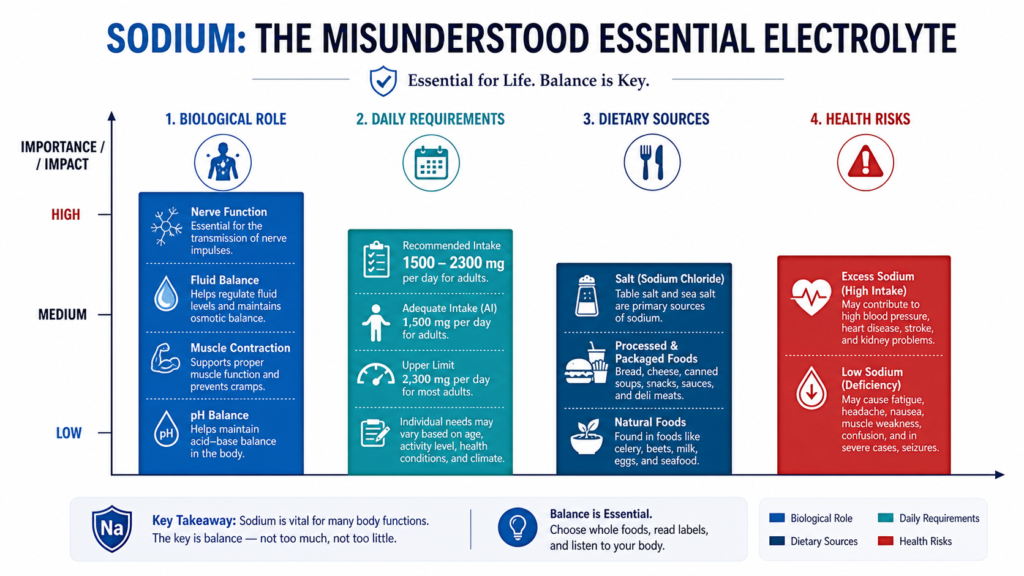
Sodium has been heavily demonized in mainstream health media, primarily due to its association with hypertension and cardiovascular disease when consumed in excess. However, sodium is an absolute biological necessity. It is the primary extracellular electrolyte, meaning it operates mainly outside of the cells, governing blood volume and total body water content.
Biological Role and Mechanism of Action
Sodium is the yin to potassium’s yang. While potassium maintains the fluid environment inside the cell, sodium dictates the fluid environment outside. The body uses a complex system involving the kidneys and the renin-angiotensin-aldosterone hormone cascade to tightly regulate sodium levels.
Sodium is required to generate action potentials—the electrical signals that allow the brain to communicate with the rest of the body. Without adequate sodium, neurons cannot fire, and muscles cannot contract. Furthermore, sodium is essential for the active transport of nutrients across the intestinal mucosa; for instance, glucose and certain amino acids rely on sodium-dependent cotransporters to be absorbed into the bloodstream.
Daily Requirements and Dietary Sources
The dietary landscape regarding sodium is unique because deficiency from poor intake is exceptionally rare. Instead, the focus is almost always on restriction. The American Heart Association recommends no more than 2300 mg a day, with an ideal limit of 1500 mg per day for most adults, particularly those with elevated blood pressure.
Sodium is ubiquitous in the modern food supply. Key sources include:
- Table salt (sodium chloride)
- Processed and cured meats (bacon, deli meats, sausages)
- Canned soups and broths
- Cheeses and fermented foods
- Condiments (soy sauce, ketchup, salad dressings)
The Danger of Extremes
While chronic high sodium intake stresses the cardiovascular system, acute low sodium levels can be equally dangerous. Hyponatremia (abnormally low blood sodium) is a critical concern for endurance athletes, such as marathon runners, who lose massive amounts of sodium through sweat and mistakenly rehydrate with vast quantities of plain water, diluting their blood plasma. Symptoms of hyponatremia range from confusion and lethargy to seizures and, in severe cases, cerebral edema and death. Thus, context, activity level, and hydration status heavily dictate individual sodium requirements.
5. Iron: The Oxygen Transporter
Iron is a quintessential trace mineral that serves as the literal breath of life for cellular metabolism. It is a critical component of several functional proteins, but its most famous and important role is in the transport of oxygen from the lungs to the tissues.
Biological Role and Mechanism of Action
Approximately 70% of the body’s iron is found in the red blood cells as hemoglobin and in muscle cells as myoglobin. Hemoglobin is a complex protein utilizing a porphyrin ring that binds an iron atom at its center. This iron atom reversibly binds to oxygen molecules, allowing red blood cells to ferry oxygen throughout the arterial system. Myoglobin acts similarly, storing oxygen within muscle tissue for use during physical exertion.
Beyond oxygen transport, iron is deeply embedded in the cellular energy factory (the mitochondria). It is a required component of the cytochromes in the electron transport chain, making iron essential for the production of ATP. Iron is also necessary for the synthesis of DNA, collagen, and vital neurotransmitters like dopamine and serotonin.
Daily Requirements and Dietary Sources
Iron requirements vary drastically depending on age, sex, and reproductive status. The RDA for adult men and postmenopausal women is 8 mg per day. However, for menstruating women, the RDA is 18 mg per day to compensate for blood loss. Pregnant women require a staggering 27 mg per day to support the expanding blood volume and fetal development.
Dietary iron exists in two distinct forms:
- Heme Iron: Found exclusively in animal products, heme iron is highly bioavailable (15% to 35% absorption rate). Sources include beef, organ meats (liver), oysters, chicken, and fish.
- Non-Heme Iron: Found in both plant and animal foods, non-heme iron has a lower bioavailability (2% to 20%). Sources include lentils, chickpeas, tofu, pumpkin seeds, and fortified cereals.
Iron Absorption Dynamics
The absorption of non-heme iron is heavily influenced by other dietary components. Consuming Vitamin C (ascorbic acid) alongside plant-based iron sources can exponentially increase iron absorption by chemically reducing ferric iron (Fe3+) into the more soluble ferrous iron (Fe2+). Conversely, compounds like tannins (found in coffee and tea) and calcium can actively block iron absorption.
According to the World Health Organization, iron deficiency is the most common and widespread nutritional disorder globally, manifesting clinically as iron deficiency anemia. Symptoms include profound fatigue, pallor, shortness of breath, and impaired immune function. However, iron toxicity is also a serious risk, particularly for individuals with a genetic condition called hemochromatosis, wherein the body absorbs too much iron, leading to organ damage.
6. Zinc: The Immune Sentinel and Cellular Builder
Zinc is a trace mineral that punches far above its weight class. It is found in every cell of the human body and is second only to iron in its concentration. Zinc is a biochemical necessity, acting as a structural, catalytic, and regulatory ion for thousands of biological processes.
Biological Role and Mechanism of Action
Zinc is crucial for normal immune system function. It is required for the development and activation of T-lymphocytes, the white blood cells responsible for fighting off infections. Zinc also possesses potent antioxidant properties, protecting cell membranes from oxidative stress and free radical damage.
One of the most fascinating roles of zinc is its involvement in gene expression. Specialized proteins contain structures known as “zinc fingers,” which use zinc ions to fold properly. These zinc fingers bind directly to DNA, turning specific genes on or off. Furthermore, zinc is absolutely indispensable for wound healing, cell division, and the synthesis of proteins and DNA. It also plays a well-documented role in maintaining the senses of taste and smell; in fact, a sudden loss of taste (ageusia) or smell (anosmia) can sometimes be traced back to severe zinc deficiency.
Daily Requirements and Dietary Sources
The RDA for adult men is 11 mg, and for adult women, it is 8 mg. Pregnant and lactating women require slightly more to support rapid fetal cell division.
The bioavailability of zinc is highest in animal products. Top dietary sources include:
- Oysters (by far the most concentrated natural source of zinc)
- Beef and pork
- Crab and lobster
- Hemp seeds and pumpkin seeds
- Lentils and chickpeas
The Phytic Acid Dilemma
For individuals relying entirely on a plant-based diet, meeting zinc requirements can be challenging. Plant sources of zinc (like legumes and whole grains) contain high levels of phytic acid (phytates). Phytic acid acts as an antinutrient, binding strongly to zinc in the digestive tract and forming an insoluble complex that the body cannot absorb. Techniques such as soaking, sprouting, and fermenting beans and grains can significantly reduce phytic acid content, thereby unlocking the zinc for absorption.
Scientific Insight: The Mayo Clinic frequently emphasizes that while mild zinc deficiency can cause delayed wound healing and increased susceptibility to colds, excessive zinc intake from high-dose lozenges or supplements can induce a copper deficiency, as the two minerals compete for the same absorption pathways in the intestine.
7. Selenium: The Antioxidant Commander and Thyroid Regulator
Selenium is a powerful trace mineral that the body requires in incredibly small, microgram amounts. Despite its trace status, its impact on longevity, antioxidant defense, and hormonal regulation is profound.
Biological Role and Mechanism of Action
Selenium’s primary biological action is exerted through selenoproteins. The body uses selenium to create an amino acid called selenocysteine, which is then incorporated into a family of over two dozen critical enzymes. The most famous of these is glutathione peroxidase. This enzyme is a frontline defender against oxidative stress, neutralizing highly reactive lipid hydroperoxides and hydrogen peroxide into harmless water and alcohols. By quenching free radicals, selenium protects cellular DNA, reducing the risk of mutations and age-related cellular degradation.
Additionally, selenium is the key that unlocks thyroid function. The thyroid gland holds the highest concentration of selenium in the human body. Selenoenzymes called deiodinases are responsible for removing an iodine atom from the inactive thyroid hormone thyroxine (T4) to convert it into the active form, triiodothyronine (T3). Without adequate selenium, the body cannot produce active thyroid hormone, leading to metabolic sluggishness and symptoms mimicking hypothyroidism.
Daily Requirements and Dietary Sources
The RDA for both adult men and women is an incredibly small 55 micrograms (mcg) per day. Because the required amount is so low, it is relatively easy to obtain through a balanced diet, provided the food is grown in selenium-rich soil.
Dietary sources of selenium are highly variable based on geography, but generally include:
- Brazil nuts (the most potent source; just one or two nuts provide more than the daily requirement)
- Yellowfin tuna and halibut
- Sardines and shrimp
- Organ meats, pork, and beef
- Cottage cheese and eggs
The Narrow Window of Safety
More is not always better when it comes to trace minerals, and selenium is the prime example of this rule. The gap between a healthy intake and toxic intake is exceptionally narrow. The Tolerable Upper Intake Level (UL) is set at 400 mcg per day. Consuming extreme amounts of selenium (often from eating handfuls of Brazil nuts daily or over-supplementing) can lead to selenosis. Symptoms of selenium toxicity include a garlic-like odor to the breath, hair loss, brittle nails, gastrointestinal distress, and mild nerve damage. Conversely, profound selenium deficiency in specific regions with poor soil quality (such as certain parts of China) has historically been linked to Keshan disease, a severe, sometimes fatal form of cardiomyopathy (heart muscle disease).
The Interconnected Web: Mineral Synergies and Antagonisms
Understanding individual minerals in isolation is helpful, but the human body does not process nutrients in a vacuum. Minerals exist in a highly complex, dynamic state of interplay. They can act as synergists, helping each other absorb and function, or as antagonists, competing for absorption sites and metabolic pathways.
For instance, we have already noted the relationship between sodium and potassium in fluid balance. A similarly tight relationship exists between calcium and magnesium. These two minerals compete for intestinal absorption. A diet excessively high in calcium (often driven by high-dose supplementation) can effectively induce a magnesium deficiency by crowding it out. In the musculoskeletal system, calcium contracts muscles, while magnesium relaxes them; a delicate ratio must be maintained for physical comfort and cardiac health.
Furthermore, minerals interact intimately with vitamins. Vitamin D is the key to the calcium door; Vitamin C is the crowbar that breaks open non-heme iron for absorption. To effectively nourish the body, an individual must look beyond single-nutrient supplementation and embrace the concept of dietary synergy. Whole foods naturally package these nutrients in evolutionary-appropriate ratios, often accompanied by necessary cofactors, enzymes, and fiber that optimize digestion and assimilation.
Summary of Essential Minerals
The following table provides a quick-reference overview of the seven essential minerals discussed, highlighting their primary classifications, core bodily functions, and optimal dietary sources.
| Mineral | Classification | Primary Physiological Function | Top Dietary Sources |
| Calcium | Macromineral | Bone architecture, muscle contraction, nerve signaling. | Dairy, sardines, fortified plant milks, kale. |
| Magnesium | Macromineral | ATP energy synthesis, muscle relaxation, enzymatic cofactor. | Spinach, pumpkin seeds, black beans, almonds. |
| Potassium | Macromineral | Intracellular fluid balance, blood pressure regulation. | Avocados, potatoes, bananas, white beans. |
| Sodium | Macromineral | Extracellular fluid balance, nerve action potentials. | Table salt, processed meats, fermented foods. |
| Iron | Trace Mineral | Oxygen transport (hemoglobin/myoglobin), energy production. | Beef liver, lentils, oysters, spinach (with Vitamin C). |
| Zinc | Trace Mineral | Immune function, wound healing, DNA synthesis. | Oysters, beef, hemp seeds, chickpeas. |
| Selenium | Trace Mineral | Antioxidant defense, thyroid hormone conversion. | Brazil nuts, tuna, sardines, eggs. |
The Role of Supplementation vs. Whole Foods
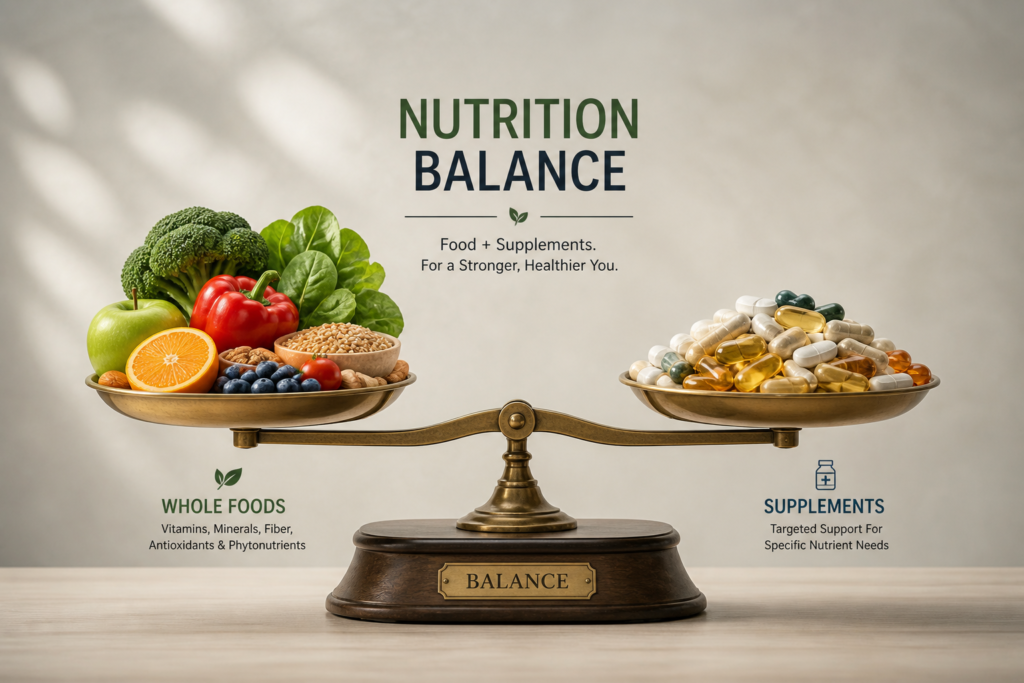
In an era of hyper-convenience, popping a multivitamin or an isolated mineral supplement seems like the ultimate nutritional shortcut. While dietary supplements hold undeniable clinical value—particularly for treating diagnosed deficiencies, supporting pregnancy, or aiding individuals with malabsorption disorders like Celiac or Crohn’s disease—they should never be viewed as a substitute for a robust, varied diet.
Whole foods provide an intricate matrix of macronutrients, micronutrients, phytonutrients, and dietary fiber that science has not yet fully replicated in a laboratory. When you eat a piece of wild-caught salmon, you are not just getting selenium and calcium; you are absorbing omega-3 fatty acids, high-quality protein, and B-vitamins in a highly bioavailable, evolutionarily familiar package.
When supplementation is medically necessary, the chemical form of the mineral dictates its efficacy. Always look for chelated minerals (minerals bound to amino acids, such as magnesium glycinate or zinc picolinate), as these structures mimic the natural forms found in food and survive the harsh acidic environment of the stomach much better than cheaper inorganic salts like carbonates or oxides.
If you suspect a mineral deficiency, the most prudent course of action is to consult with a qualified healthcare provider. Simple blood panels can easily identify deficiencies in iron or magnesium, allowing for targeted, safe, and effective interventions rather than blind supplementation.
Conclusion: Building a Resilient Biological Foundation
Health is not built through brief spurts of extreme dieting or massive doses of isolated vitamins. True, resilient health is forged daily through the consistent, deliberate intake of essential building blocks. The seven essential minerals detailed in this guide—calcium, magnesium, potassium, sodium, iron, zinc, and selenium—are the silent operators that keep your heart beating, your brain firing, your immune system vigilant, and your skeleton strong.
By prioritizing a diverse, whole-food-based diet rich in dark leafy vegetables, high-quality proteins, nuts, seeds, and legumes, you provide your biological machinery with the precise elements it requires to thrive. Remember that nutrition is a marathon, not a sprint. Minor adjustments to your daily culinary habits—such as swapping a heavily processed snack for a handful of pumpkin seeds, or pairing a vitamin C-rich bell pepper with an iron-dense lentil salad—can yield profound, compounding dividends for your longevity and daily vitality.
References and Trusted Resources for Further Reading
To deepen your understanding of nutritional biochemistry and mineral requirements, consider exploring the following authoritative resources and scientific databases:
- National Institutes of Health (NIH) – Office of Dietary Supplements: A premier, scientifically rigorous resource detailing exhaustive fact sheets on every essential vitamin and mineral. (NIH ODS Fact Sheets)
- Harvard T.H. Chan School of Public Health – The Nutrition Source: Offers evidence-based dietary guidelines, exploring the intersection of nutrition, disease prevention, and public health. (The Nutrition Source)
- World Health Organization (WHO): Provides global data and guidelines concerning micronutrient deficiencies, particularly regarding iron and zinc in developing populations. (WHO Nutrition)
- The Mayo Clinic: An excellent, user-friendly resource for understanding the clinical symptoms of mineral deficiencies and toxicities. (Mayo Clinic Nutrition and Healthy Eating)
- Wikipedia – Dietary Elements: A broad, heavily cited overview of the chemical nature of minerals and their physiological significance in human biology. (Wikipedia: Dietary element)
PubMed Central (PMC): For those looking to dive into primary scientific literature, PMC hosts thousands of peer-reviewed papers on mineral bioavailability, cellular mechanisms, and epidemiological studies. (NCBI PubMed)

Emily Carter is a Senior Health Researcher and Supplement Analyst at the Nutrasfit Research Team, based in Austin, Texas. She specializes in evaluating dietary supplements through ingredient analysis, scientific research, and real-world effectiveness.
With a background in nutrition science, Emily focuses on breaking down complex health information into simple, practical insights that readers can trust. Her work is centered on helping individuals make informed decisions and choose supplements that are safe, effective, and aligned with their health goals.