

Navigating weight management can feel like an entirely different game once you cross the threshold into your 30s. If you have noticed that the diet and exercise routines that effortlessly kept you lean in your 20s no longer yield the same results, you are not alone. This is a common, widely documented experience, and crucially—it is not in your head.
The struggle to lose weight or maintain a healthy body composition after age 30 is rooted in a complex intersection of biological aging, hormonal shifts, and significant lifestyle changes. Validating this frustration is the first step; the second is understanding the science behind it so you can adapt your approach.
This comprehensive guide delves deeply into the physiological, hormonal, and environmental reasons why weight loss becomes more challenging as we age. Furthermore, it outlines evidence-based, clinically backed strategies for effectively managing overweight and obesity, reducing associated health risks, and building a sustainable, healthy lifestyle for the decades to come.
Part 1: The Biology of Aging – Why Your Body Changes After 30
To understand why weight management requires a new strategy in your 30s, we must examine what is happening on a cellular and systemic level. The body you inhabit at 35 is biologically distinct from the body you had at 25.
1. The Decline of the Basal Metabolic Rate (BMR)
Your Basal Metabolic Rate (BMR) is the number of calories your body requires to perform basic, life-sustaining functions—like breathing, circulating blood, and cellular repair—while at rest. BMR accounts for roughly 60% to 75% of your total daily energy expenditure.
Research indicates that starting in your late 20s to early 30s, your BMR begins to drop by approximately 1% to 2% per decade. While this may sound minuscule, a 2% drop can equate to burning 30 to 50 fewer calories a day at rest. Over the course of a year, this unadjusted caloric surplus can lead to an insidious creep of 3 to 5 pounds of fat gain, even if your diet and exercise habits haven’t changed.
2. Sarcopenia: The Silent Muscle Thief
One of the primary drivers of metabolic slowdown is sarcopenia, the age-related loss of skeletal muscle mass and function. Muscle tissue is highly metabolically active; it requires significantly more energy (calories) to maintain than fat tissue.
- The Timeline: Studies published in journals such as the American Journal of Clinical Nutrition confirm that after age 30, adults can lose anywhere from 3% to 8% of their muscle mass per decade if they are not actively engaged in resistance training.
- The Consequence: As muscle mass decreases, your body’s overall engine shrinks. You burn fewer calories around the clock. This creates a compounding effect: you lose the tissue that burns calories, replacing it with adipose (fat) tissue, which burns very few.
3. Hormonal Shifts
Hormones are the chemical messengers that dictate how your body stores and utilizes energy. In our 30s, the production of several key hormones begins to alter:
- Human Growth Hormone (HGH): Somatopause is the gradual decline in growth hormone, which peaks during puberty and starts to drop significantly in your 30s. HGH plays a vital role in maintaining muscle mass and promoting fat breakdown (lipolysis). Its decline makes muscle retention harder and fat accumulation easier.
- Testosterone: Both men and women experience a natural decline in testosterone starting in their 30s (about 1% per year for men). Testosterone is crucial for muscle protein synthesis. Lower levels contribute to muscle loss and an increase in visceral fat (belly fat).
- Estrogen and Progesterone: For women, while menopause may be years away, the late 30s can mark the beginning of perimenopause. Fluctuating estrogen levels can lead to insulin resistance and a shift in fat storage patterns. Whereas younger women tend to store fat in the hips and thighs (subcutaneous fat), declining estrogen redirects fat storage to the abdomen (visceral fat).
- Thyroid Function: The thyroid gland regulates metabolism. While not strictly tied to hitting 30, the incidence of subclinical hypothyroidism (a sluggish thyroid) increases with age, subtly slowing the rate at which your body converts food into energy.
4. Cellular Changes: Mitochondrial Efficiency
Mitochondria are the “powerhouses” of your cells, responsible for converting nutrients into ATP (cellular energy). As we age, mitochondrial function naturally becomes less efficient. They decrease in number and produce less energy, making it harder for the body to oxidize (burn) fat effectively.
Part 2: Lifestyle and Environmental Factors
Biology is only half the equation. The reality of modern adulthood means that the environmental and psychological landscape of a 30-something is drastically different from that of a 20-something.
1. The Stress-Cortisol Connection
The 30s are often characterized by peak life pressures: advancing in a career, buying a home, starting a family, or managing finances. Chronic psychological stress triggers the continuous release of cortisol, the body’s primary stress hormone.
- Elevated cortisol increases appetite, particularly for highly palatable, hyper-palatable foods (those high in sugar, fat, and salt).
- Cortisol signals the body to store fat, specifically visceral fat around the organs in the abdomen, as an evolutionary survival mechanism against perceived “famine” (stress).
2. Sleep Deprivation and Architecture
With increased responsibilities often comes decreased sleep duration and quality. Sleep is a master regulator of metabolic hormones.
- Ghrelin and Leptin: Lack of sleep spikes ghrelin (the hormone that signals hunger) and suppresses leptin (the hormone that signals satiety). A study by the University of Chicago found that sleep-deprived individuals consume an average of 300 extra calories per day.
- Insulin Sensitivity: Even a few nights of poor sleep can induce temporary insulin resistance, causing your body to pump out more insulin to manage blood sugar, which in turn promotes fat storage.
3. The Sedentary Shift
In your 20s, you might have walked across a college campus, worked on your feet, or had the free time for recreational sports. By your 30s, many adults transition to desk jobs, extensive commutes, and evenings spent recovering from the day. This drastically reduces Non-Exercise Activity Thermogenesis (NEAT)—the calories burned through daily movements like fidgeting, walking to the car, or doing chores. NEAT can account for up to 15-30% of daily calorie burn, and its reduction is a massive contributor to adult weight gain.
Comparative Overview: 20s vs. 30s Metabolism
| Factor | In Your 20s | In Your 30s & Beyond |
| Muscle Mass | Peak natural levels; easier to build and maintain. | Gradual decline (sarcopenia) begins; active effort needed to maintain. |
| Hormone Profile | High Growth Hormone, optimal sex hormones. | Gradual decline in HGH, Testosterone, and fluctuating Estrogen. |
| Fat Storage | More subcutaneous (under the skin), evenly distributed. | Shift toward visceral (abdominal/belly) fat. |
| NEAT Levels | Generally higher due to lifestyle and lack of routine desk work. | Often drastically lower due to sedentary careers and commutes. |
| Recovery Time | Rapid recovery from intense exercise or poor sleep. | Longer recovery needed; higher sensitivity to sleep deprivation. |
Part 3: Understanding Overweight and Obesity
To manage weight effectively, it is critical to understand how the medical and scientific communities define and categorize excess weight.
Clinical Definitions
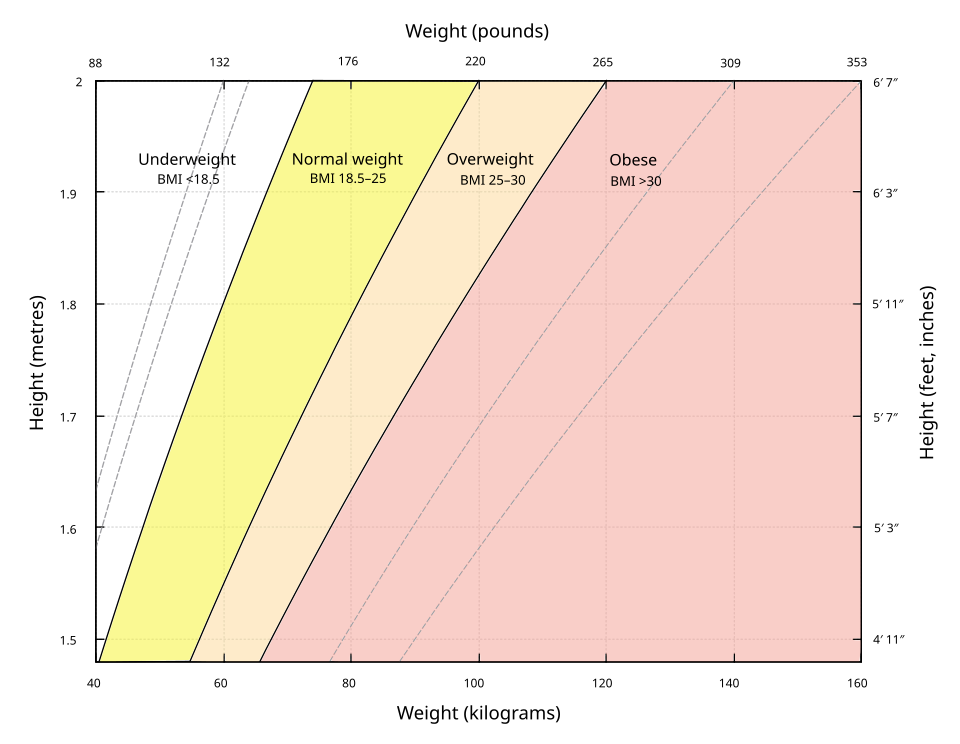
- Body Mass Index (BMI): BMI is a simple calculation using a person’s height and weight ($BMI = kg/m^2$).
- Normal: 18.5 – 24.9
- Overweight: 25.0 – 29.9
- Obesity: 30.0 and above.
- Note: While useful for population-level data, BMI is flawed on an individual level because it cannot distinguish between muscle weight and fat weight. A bodybuilder may have an “obese” BMI while having very low body fat.
- Body Fat Percentage: A more accurate measure of health. Healthy ranges for women in their 30s are typically 20-30%, and for men, 12-20%.
- Waist Circumference: This is often the most critical metric for adults over 30, as it indicates the amount of visceral fat. According to the World Health Organization (WHO), health risks increase significantly with a waist circumference over 35 inches (88 cm) for women and 40 inches (102 cm) for men.
Visceral vs. Subcutaneous Fat
- Subcutaneous Fat: The fat you can pinch just under the skin. While excess amounts are not ideal, it is largely metabolically benign.
- Visceral Fat: The deep abdominal fat that wraps around your internal organs (liver, pancreas, intestines). Visceral fat is biologically active; it acts like an endocrine organ, secreting inflammatory cytokines and hormones that disrupt your body’s function, driving up blood pressure and insulin resistance.
Part 4: The Health Risks of Carrying Excess Weight
The urgency of weight management after 30 is not merely aesthetic; it is fundamentally about longevity and quality of life. The accumulation of excess body fat, particularly visceral fat, is linked to a cascade of chronic conditions collectively known as Metabolic Syndrome.
- Cardiovascular Disease: Excess weight increases the workload on the heart. It is strongly correlated with hypertension (high blood pressure), high LDL (bad) cholesterol, and low HDL (good) cholesterol, leading to atherosclerosis (hardening of the arteries) and increasing the risk of heart attacks and strokes.
- Type 2 Diabetes: As fat cells expand, they become resistant to insulin. The pancreas must pump out more insulin to clear glucose from the blood. Over time, the pancreas fatigues, leading to chronically elevated blood sugar and Type 2 Diabetes.
- Joint Issues and Osteoarthritis: Every pound of excess weight exerts roughly 4 pounds of extra pressure on the weight-bearing joints (knees, hips, ankles). Over time, this accelerates the breakdown of cartilage.
- Sleep Apnea: Excess fat around the neck can compress the airway during sleep, leading to Obstructive Sleep Apnea (OSA). OSA ruins sleep quality, spikes cortisol, and creates a vicious cycle of fatigue and weight gain.
- Certain Cancers: The chronic inflammation caused by visceral fat is linked to an increased risk of several cancers, including breast, colon, endometrial, and kidney cancer.
Part 5: Proven, Evidence-Based Strategies for Effective Weight Management
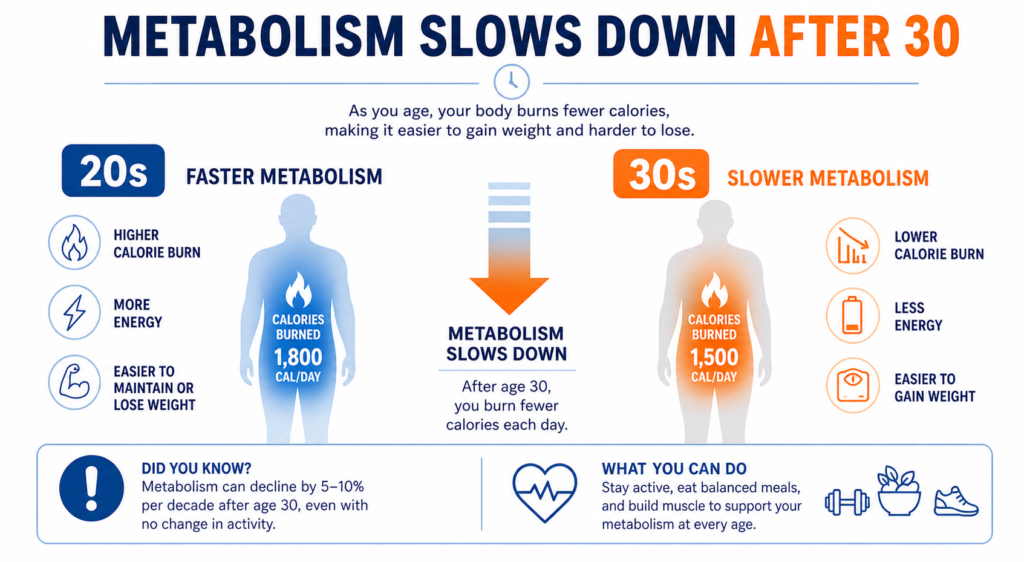
Because your biology has shifted, your strategy must shift from the reactive, quick-fix diets of your youth to a proactive, sustainable lifestyle design. Starvation diets and endless hours on the treadmill will backfire in your 30s by destroying your remaining muscle mass and crashing your metabolism.
Here is the scientifically backed blueprint for managing weight effectively after 30.
1. Nutritional Reprioritization
Nutrition remains the primary driver of fat loss. You cannot out-train a poor diet, especially when your BMR has naturally slowed. However, the focus must shift from merely “eating less” to “eating smarter.”
- The Foundation: A Sustainable Caloric Deficit
- To lose body fat, you must consume fewer calories than you expend. However, drastic deficits (e.g., eating 1,200 calories a day) will cause your body to cannibalize muscle tissue for energy and down-regulate your thyroid, bringing weight loss to a halt. Aim for a moderate deficit of 300 to 500 calories per day to promote a safe, sustainable loss of 0.5 to 1 pound per week.
- Prioritize Protein Radically
- Protein is the most crucial macronutrient for anyone over 30 trying to manage weight.
- Muscle Preservation: It provides the building blocks (amino acids) needed to fight sarcopenia and maintain your metabolic engine.
- Satiety: Protein is highly satiating, keeping you fuller for longer and preventing overeating.
- Thermic Effect of Food (TEF): Your body burns roughly 20-30% of the calories in protein just digesting it (compared to 5-10% for carbs and 0-3% for fats).
- Target: Aim for 0.7 to 1 gram of protein per pound of ideal body weight daily.
- Embrace Fiber and Volume Eating
- Fiber slows digestion, blunts blood sugar spikes, and feeds a healthy gut microbiome (which research increasingly links to weight regulation). Volume eating involves prioritizing foods with low energy density but high volume—like leafy greens, broccoli, berries, and water-rich vegetables. These stretch the stomach receptors, sending fullness signals to the brain without packing in calories.
- Manage Carbohydrates, Don’t Fear Them
- You do not need to eliminate carbs, but you must shift their quality. Replace refined, white carbohydrates (which spike insulin and promote fat storage) with complex, slow-digesting carbohydrates (oats, sweet potatoes, quinoa).
- Limit Liquid Calories and Alcohol
- Alcohol halts fat oxidation. When alcohol is in your system, your liver prioritizes clearing the toxin (ethanol) before it will process fats or carbohydrates. Furthermore, alcohol lowers inhibitions, often leading to poor dietary choices late at night.
Macronutrient Optimization Table
| Nutrient | Role in Over-30 Weight Management | Primary Sources |
| Protein | Combats sarcopenia, boosts BMR via TEF, maximizes satiety. | Chicken, fish, lean beef, tofu, Greek yogurt, lentils, whey/plant protein. |
| Fiber/Carbs | Regulates insulin, feeds gut microbiome, provides sustained energy. | Leafy greens, cruciferous veg, oats, beans, berries. |
| Healthy Fats | Crucial for hormone production (testosterone/estrogen balance), joint health. | Avocados, olive oil, almonds, walnuts, salmon, chia seeds. |
2. Exercise: The Shift from Cardio to Iron
If your 20s were about cardio to burn calories, your 30s must be about resistance training to build your metabolism.
- Resistance Training (Strength Training): This is non-negotiable for combating sarcopenia. Lifting weights 3 to 4 times a week sends a biological signal to your body to retain and build muscle mass. More muscle equals a higher BMR, meaning you burn more calories even while sitting at your desk. Focus on compound movements that work multiple muscle groups: squats, deadlifts, push-ups, rows, and overhead presses.
- Zone 2 Cardio for Mitochondrial Health: While strength training is the priority, cardiovascular health is still vital. Instead of high-intensity intervals that can spike cortisol, focus on “Zone 2” cardio. This is steady-state exercise (like brisk walking, cycling, or light jogging) where you are working but can still hold a conversation. 150 minutes of Zone 2 cardio per week improves mitochondrial density, training your body to become highly efficient at burning fat for fuel.
- Maximize NEAT: Intentionally engineer movement back into your day. Take the stairs, park further away, use a standing desk, or commit to a 15-minute walk after every meal. These small movements add up to hundreds of calories burned passively over the day.
3. Behavioral and Psychological Architecture
Weight management is as much a psychological endeavor as a physiological one. Relying on “willpower” is a losing strategy; building systems and habits is how you win.
- Sleep Hygiene: Treat sleep as a metabolic intervention. Aim for 7 to 9 hours of quality sleep. Keep your bedroom cool, dark, and free of blue-light-emitting screens for at least an hour before bed to optimize natural melatonin production.
- Stress Management: Since chronic cortisol drives visceral fat storage, active stress mitigation is a weight-loss tool. Incorporate practices like deep diaphragmatic breathing, meditation, yoga, or simply setting firm boundaries around work hours.
- Mindful Eating: In our fast-paced lives, many adults eat while distracted by screens or steering wheels. This prevents the brain from registering satiety. Practice sitting at a table, chewing food thoroughly, and eating slowly. It takes roughly 20 minutes for your gut to signal your brain that you are full.
- Environment Design: Willpower is a finite resource. Design your environment to make good choices easy and bad choices difficult. If you know you stress-eat ice cream at 9 PM, do not keep it in the freezer. Pre-portion healthy snacks and have meals prepped for busy workdays.
4. Medical and Clinical Interventions
If you have implemented rigorous lifestyle changes for several months without seeing results, it is crucial to consult a healthcare professional. There may be underlying clinical issues, and modern medicine offers robust tools for obesity management.
- Blood Panels: A doctor can check your thyroid function (TSH, T3, T4), sex hormones (testosterone, estrogen), fasting insulin, and HbA1c to rule out metabolic roadblocks.
- Anti-Obesity Medications (AOMs): The landscape of weight management has been revolutionized by medications like GLP-1 receptor agonists (e.g., Semaglutide, Tirzepatide). These medications mimic natural hormones to drastically reduce appetite, slow gastric emptying, and improve insulin sensitivity. They are prescribed for individuals with clinical obesity (BMI >30) or a BMI >27 with weight-related comorbidities. They are highly effective but must be used in conjunction with lifestyle changes to maintain muscle mass and long-term health.
- Bariatric Surgery: For individuals with severe obesity (BMI >40, or >35 with severe comorbidities), procedures like gastric bypass or sleeve gastrectomy alter the digestive system to restrict food intake and modify hunger hormones. This is a major medical intervention but can be life-saving for the right candidates.
Conclusion: Redefining Success in Your 30s and Beyond
Weight loss becoming difficult after 30 is a physiological reality, a result of shifting hormones, slowing metabolism, and increased life stressors. Acknowledging this is empowering; it means your struggles are not due to a lack of moral fortitude, but rather a change in the biological rules of the game.
Managing weight effectively as an adult requires discarding the pursuit of rapid weight loss in favor of sustainable, health-promoting habits. It means protecting your muscle mass as if it were your most valuable asset, feeding your body dense nutrients rather than restricting it into starvation, and actively managing stress and sleep.
The goal is no longer just to look a certain way, but to build a resilient, metabolically flexible body capable of carrying you vibrantly through the next several decades. Consistency, patience, and self-compassion are your most powerful tools.
Scientific References you should know
1. Metabolism & BMR Decline
- Pontzer, H. et al. (2021). Daily energy expenditure through the human life course.
👉 Science Journal
https://www.science.org/doi/10.1126/science.abe5017
✔ Shows metabolism remains stable until ~60 but lifestyle & body composition drive changes - Roberts, S.B. & Dallal, G.E. (2005). Energy requirements and aging.
👉 Public Health Nutrition
https://pubmed.ncbi.nlm.nih.gov/16022758/
✔ Explains gradual decline in energy expenditure with age
2. Sarcopenia (Muscle Loss After 30)
- Cruz-Jentoft, A.J. et al. (2019). Sarcopenia: revised European consensus.
👉 Age and Ageing Journal
https://academic.oup.com/ageing/article/48/1/16/5126243
✔ Defines sarcopenia and its progression - Mitchell, W.K. et al. (2012). Sarcopenia, dynapenia, and the impact of advancing age.
👉 Journal of Cachexia, Sarcopenia and Muscle
https://pubmed.ncbi.nlm.nih.gov/22740241/
✔ Confirms 3–8% muscle loss per decade after 30

Emily Carter is a Senior Health Researcher and Supplement Analyst at the Nutrasfit Research Team, based in Austin, Texas. She specializes in evaluating dietary supplements through ingredient analysis, scientific research, and real-world effectiveness.
With a background in nutrition science, Emily focuses on breaking down complex health information into simple, practical insights that readers can trust. Her work is centered on helping individuals make informed decisions and choose supplements that are safe, effective, and aligned with their health goals.